Train like a superstar athlete
Professional athletes and models are blessed with something more important than talent. Sure, some of them hit the Looks Lottery or the Talent Trifecta at the genetic bookies’, but the bulk of those who make it to the top of their game, spent a long time working at it.
There’s no need to give half your life over to your personal trainer and stop eating anything that’s not green – but training efficiently for your body type will help sort out the sag and help you get to the stop of the stairs without pausing for a puff. Obviously its important to consider your physical limitations when exercising – give your doctor a call before radically changing your regime.
The awesome foursome of Olympic swimming legend Kirsty Coventry, trail-running maestro Ryan Sandes, Springbok superstar Pat Lambie and actor & model Alex McGregor share their secrets to staying in peak condition.
The Olympic Swimmer
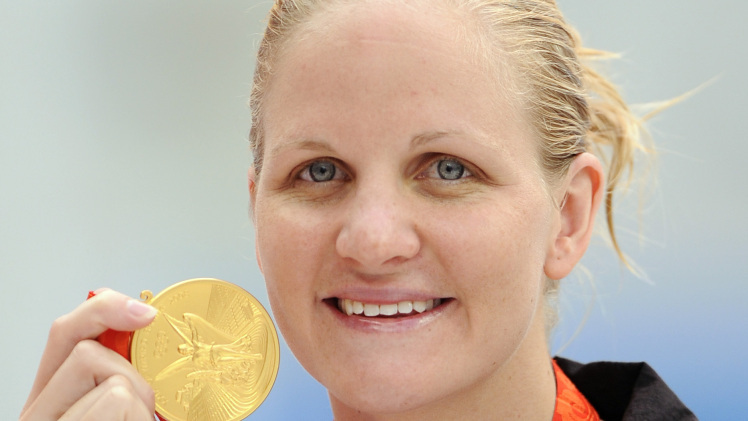
Zimbabwe’s Kirsty Coventry made her Olympic swimming debut at the age of 16 in Sydney in 2000. At the two subsequent Games, she picked up 7 medals and has her eye firmly on a strong finish at the 2016 Olympics in Rio. She has held 6 World Records and her 7-medal haul ties her for first place for individual swimming medals amongst all the women in Olympic history.
Coventry says that a combination of cardio, strength and core is important for helping her attain success in the Backstroke and Individual Medley. “It is so important to have a strong core as a lot of the drive in my kicking comes from here. Strength is particularly vital for the shorter distances,” she says. “Have you ever heard about hitting the wall? This is where cardio makes all of the difference. Having a good combination of all 3 of these exercises is fundamental in creating an Olympic swimmer – but it is nothing without the mental strength or drive and determination required to want to be the best”.
Kirsty follows the same schedule on Monday, Wednesday and Friday with no training on Tuesday, Thursday and Saturday afternoons – and taking Sunday off completely. Typically, her training schedule starts with a 07:00 wake-up call and a small breakfast. “I’m not fond of eating early, but I know how important a pre-workout meal is – so I make sure that this is the 1st thing that I do. I generally have a yogurt and half a banana,” she says. Although she started at 05:00 when she was in High School and College, Kirsty can now afford to start at 08:00 – but still swims for 2 hours. “I’ll then eat something on the way to gym where I will work out for an hour. Next up is lunch – during summer I’ll have a salad with leftovers from dinner or chicken / pasta / tuna / salmon and in winter, soup with the heated leftovers. I then nap for about 90 minutes at 1:30 – if you want to make me really happy, make sure there’s no noise during that time!”
After a post-nap snack of biltong, cottage cheese on a biscuit or pickles, she hits the pool again at 16:00 for another 2 hours. Kirsty will replenish her energy with another snack after training – leftover lunch, fruit or another protein-packed nibble. She’ll spend the rest of the day relaxing with family and friends having a dinner of roast chicken, chicken breast, turkey, fish or red meat (although not more than 2 x times per week) and lots of fresh, steamed vegetables. “I have a sweet tooth so after dinner, I’ll have dessert, which is usually fruit, a little chocolate and a cup of tea,” she says. Bedtime is 22:00 after some TV and light reading.
Coventry says that her favourite type of training is time spent in the pool itself – though that can also be the toughest type of training. “As much as it is about racing somebody else, it’s about getting faster and being better than I was yesterday. I love competition and I live for that feeling of accomplishment,” she says. “That said, with the incredible feeling of accomplishment comes the falls and negativity of being unfit, having a bad day, or just not ‘getting it’. It can be a love/hate relationship but the feeling of accomplishment far outweighs the tough days”. She says that training with a partner helps her push herself. “I received a number of scholarships from different universities and finally ended up choosing Auburn because they had the best swimmers. I knew that I needed to swim against the best in order to be my best. Nothing has changed and I have decided to make the move to Charlotte, North Carolina, where I will be training with some of the best swimmers in the world under SwimMac Team Elite”.
Coventry cautions against adopting someone else’s training regime because everyone’s body is different. “You cannot just take my training method or Usain Bolt’s and expect to become the greatest. You have to adjust your exercise regime to your body type. I can’t run very far on the road because I have weak knees, so I adjust this and use treadmills more often. Overtraining is also a huge problem and takes a lot of time to get over,” she says. A major misconception about training is that people train for a single sport. “Don’t be scared to mix it up and try new disciplines that will complement what you are training for”, says Kirsty. “This prevents you from becoming bored and if the new venture is more tiring or complicated than what you normally do, you can’t get wait to get back to your main discipline. For example, I’ve recently included boxing in my training regime, it’s brought a different element into the mix – I’m really enjoying it”. Her advice for people wanting to get fit is simple: “find a partner and start now”.
Shifting Sandes

International Trail Running sensation Ryan Sandes is the first person to ever win an ultra trail race on all 7 continents. In 2011, Ryan won the Leadville 100 miler mountain race in Leadville, Colorado at his first attempt, setting the 3rd fastest time in the history of the race and the fastest time by a non-American. He ran those 100 treacherous trail miles (160km) in under 17 hours – beating his nearest competitor by more than half an hour.
Unsurprisingly, Sandes says that cardio work is his most important form of training. “Strength work is also very important, though,” he says. “Most of my programme is geared towards running, but I do some strength and mobility sessions in a gym to stay injury free”.
Sandes runs trails – no matter where he is, for between 12 and 22 hours a week. He does around 5 hours of strength work and also spends a fair amount of time getting massages, visiting the Chiropractor, Lynotherapist and Physiotherapist. His favourite type of training is being out on the trail itself. “Running on the trails as that is what I love to do. I really enjoy being outdoors and I get to see and explore so many cool places when I am running,” he says. ”Because I love the running so much, I would say the strength work I do in the gym is my least favourite – I really love being outdoors”. He takes one full day a week off from training to physical and mentally recover – something almost as important as the training itself.
He cautions that there is such a thing as ‘bad’ exercise. “I believe it is very important to stay in tune with your body and listen to how it feels. If you are not feeling good or have not recovered properly from your previous training session then there’s no point pushing too hard. Recovery is just as important as training – many athletes make the mistake of overtraining, which can lead to poor performance or injury,” says Sandes. He says the biggest misconception about exercise is that only the hard training sessions make you stronger and fitter.” I don’t believe this is true – you also need to have some very easy training sessions to enable your body to recover and absorb the hard training sessions”.
Trail running is a solitary sport, so Ryan spends about 80% of his training time, flying solo – but does occasionally train with other runners – particularly during the off-season. “In winter it’s good to do group training sessions as it is harder to skip a group training session, compared to if you are training on your own,” he says. “Mix up your training in the off-season and try something new. During the off-season I set myself goals and this helps me keep my motivation”. Again, down-time is important, so Ryan takes a month or two off from running every year, but still does cross-training on the mountain bike and lots of strength training.
If you’re looking to get fit for summer, Sandes recommends making it part of your lifestyle. “You should try eat healthily all your round, exercise through out the year and look after your body,” he says. “Nutrition is really important as that is what fuels your body. If you get your nutrition wrong it will lead to poor performance and your body can even eventually break down”.
Talent and Application

Pat Lambie made his Sharks debut in the 2010 Super 14 competition, aged just 20. He’d already played SA Schools Rugby in Grade 11 and 12 and represented the Springbok U21 side before making his full international debut at the end of 2010 on the Boks’ UK tour. Equally comfortable at full-back, flyhalf and centre, Lambie is also an excellent cricketer, golfer and surfer. Talent is one thing, but Lambie also trains harder than most.
He cites a balanced workout programme, including cardio, strength and core work, as vital. “Personally, I have had trouble with my groin and hips in the past, so core is most important for me. I try to do a bit of work in this area everyday,” says Lambie. “Core work also helps you know where your body is, and helps you move better”.
His favourite type of training is ‘movement prep’ – a thorough warm-up involving elastic bands, foam rollers, core, stretching and active movements. Pat enjoys training in general, but never enjoys doing Bulgarian Squats. Though declaring that he’s no expert, Lambie says that its important to use correct techniques and to understand your body, what works for it and what doesn’t, when it comes to adopting an exercise regime.
When he’s not training with the rest of the team, he ‘rests’ but surfing, swimming or playing some golf. “Rest and recovery are as important as the work-out itself. My body craves movement though, so I’ll do some other form of exercise on a rest-day”. His partner-in-crime on off-days is his wife, Kate. “I drag Kate along with me mostly. Fortunately for me, she doesn’t take much convincing!” he says. Lambie says he tries to stay active, even during the off-season. “ I try to stay active by doing other activities like surfing or golf. You always feel better at the end of the day after some form of movement or exercise. Off-season is a really nice period where we are required to do some gym work, but wherever and whenever suits us. Its about freshening up, so a change in scenery and some different forms of activity are good things,” he says.
His advice for someone looking to get fit for summer? “Find something you can enjoy doing. This should help keep you motivated to reach your fitness goals”.
Alex the Actor
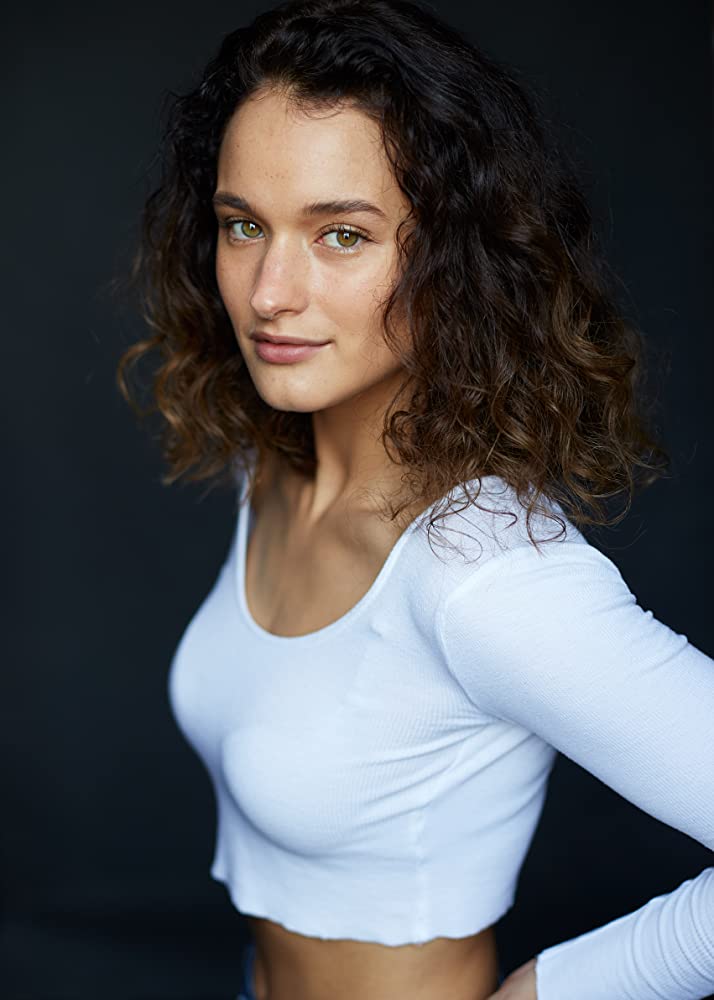
Fresh-faced model and actor Alex McGregor has been performing for about as long as she can remember. Mixing fashion shoots, theatre, commercials and film work keep her busy – but she always makes sure she takes time out to get some exercise.
She says a mix of cardio, strength and core work are important in her line of work. “I need to be fit and strong, and look lean and toned – so I do a bit of everything,” she says. “I am OBSESSED with S.W.E.A.T 1000 classes – it’s my favourite type of exercise because it’s a full-body workout. Cardio + weight training = amazing results!” Alex says that acting requires her to be an all-rounder, because she always needs to look her best – but also be fit enough to do her own stunts, which she loves.
Alex attends S.W.E.A.T 1000 classes on a two days on / one day off rotation. On ‘off’ days, she does Power Yoga or Sculpt Yoga (Yoga with light weights). “It’s strange how much has changed in a year,” she says. “I used to hate exercise, but I’m now addicted to classes. High-intensity interval training combined with strength training is my favourite! I can’t believe how fit and strong I’ve become”. On the opposite side of the coin, you’ll never find Alex pounding the pavement. “I’m not a fan of roadrunning. I get bored very quickly,” she says. To stay motivated, she’ll train with her boyfriend, fellow actor Bjorn Steinbach. “I need to be pushed!” she says. “I also have to listen to music when I train. I find it very motivating if you gym along to your favourite songs – it gives you that extra push!”
Alex motivates herself to train because she wants to make it to the top of her game. ”Nothing’s going to change if you stay snuggled in your warm bed. My boyfriend always says ‘It’s easy to stay in bed, and most people do, but I don’t want to be like ‘most people’. I want to be one of the few that stick to what they say they are going to do. So I get up and train. Like I said, he’s very motivating!”
She says the biggest misconception about exercise for women is that weight training makes you put on loads of bulky muscle. “Lifting weights makes you toned and lean – so smash a few S.W.E.A.T. 1000 classes, eat a well-balanced diet, and you’ll be well on your way!” says Alex.
Consultant to the (Sports) Stars
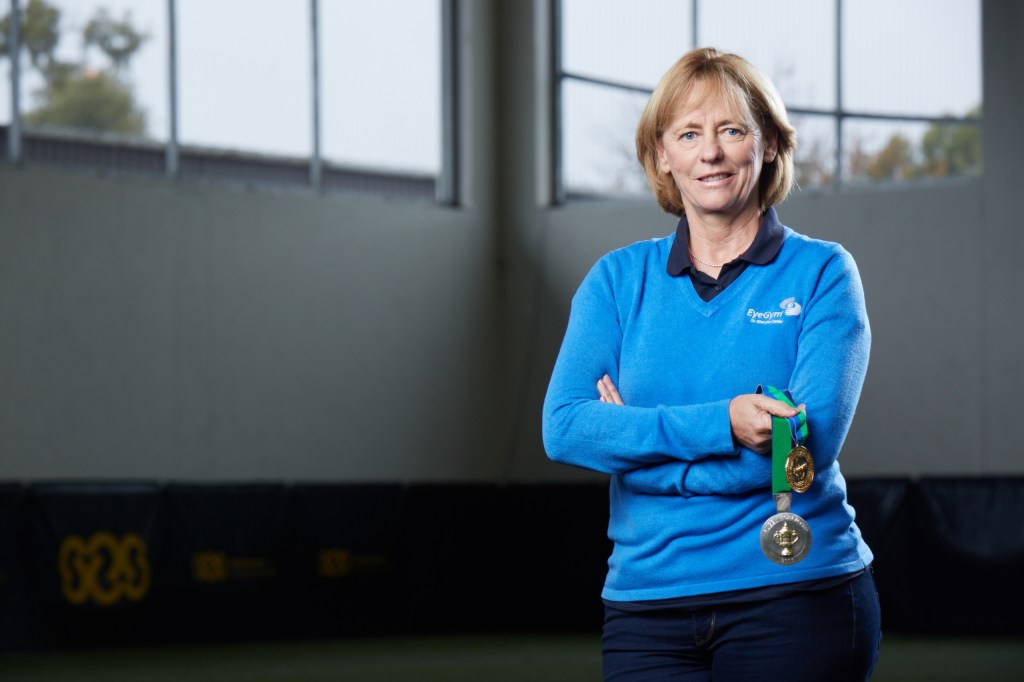
Physical exercise is important – but mental and visual acuity play a vital role in success, too. South African Dr Sherylle Calder’s EyeGym system has helped sharpen up the skills of the Springboks and All Blacks, the 2003 World Cup-winning Australian Cricket team, a host of English Premier League Football Teams, Ernie Els and even a number of Super Rugby teams and Formula One drivers. Johnny Wilkinson says the program gave him more time to make better decisions and Bryan Habana reckons it’s made his hands as quick as his feet.
Calder says that EyeGym trains and improved the eye muscles. “The process skills can also be improved, and response skills of eye-hand, foot and body co-ordination can be enhanced. When people see more, they can assess the situation much quicker, therefore exercising their options, and ultimately making better decisions,” she says. “80-90% of decisions made in sport are based upon visual information. Developing visual skills includes learning to use both eyes together effectively. Having both eyes move, align and focus as a team enhances your ability to interpret and understand the potential visual information that is available to you. Once you see it correctly, you can then process that information. You can train the input skill and improve the processing skill to improve the response. Most people are born with good eyesight but vision, the ability to identify, interpret and understand can be trained and improved,” she says. EyeGym has applications in enhancing academic performance and business acumen as well. Calder says the benefits include, amongst others, better concentration, quicker response, better timing, improved decision making, improved coordination, improved overall academic results and improved comprehension skills.
Visit www.drsheryllecalder.com for more on EyeGym.
*This article was originally published in khuluma.
 wineoclock