Be like Bear
For the urban adventurer, your typical survival course would teach you how to solve problems that would help you survive in your city. For Capetonians, how to fashion a wind shelter from construction tape and discarded craft beer bottles. For Jo’burgers, it’d be how to navigate past a cash-in-transit van without spooking the guards or becoming a statistic.
City life is tough, but were you to find yourself in an actual survival situation in the real world, you’d want someone like Bear Grylls on hand. The ‘Ultimate Survivor’ man is the 21st century’s MacGyver, able to live for days on his own pee and start a fire with his sunglasses. His burgeoning popularity and successfully affable TV persona have led to the launch of franchised Bear Grylls Survival Academies (BGSA) around the world, with South Africa the most recent addition. For around R4500, you can spend 24 hours in the bush learning valuable skills which will help you survive in an emergency with nothing but your wits. And a knife. And a sleeping bag. And several other participants to help with the heavy lifting.
Learn to Bear
The South African branch of BGSA kicked off their inaugural 24 Hour Adult Survival course in May by pairing up a group of journalists & paying customers and heading off into the wilds of the Magaliesberg for a weekend. The kind of people who sign up for the BGSA courses are hardcore outdoors enthusiasts, validly passionate about equipping themselves with vital skills that could make the difference between life and death for themselves and their fellow calamity survivors. There’s also an interesting sub-culture of ‘Bearlievers’ who follow the Gospel According To St Bear, to the letter. “What kind of knot would you tie in your rope to ensure that you didn’t plummet to your death from this vertiginous cliff?” asks the instructor. “Well I saw an episode where Bear used a clove hitch to secure himself to a ledge so he could get some sleep!” comes the answer from the Bearliever, without a moment’s hesitation. “How do you determine magnetic north if you don’t have a compass?” is the testing query from the instructor. Up shoots the hand. “Well, Bear once used…”. The Bearliever’s got this. Friendly, enthusiastic and totally living the dream.
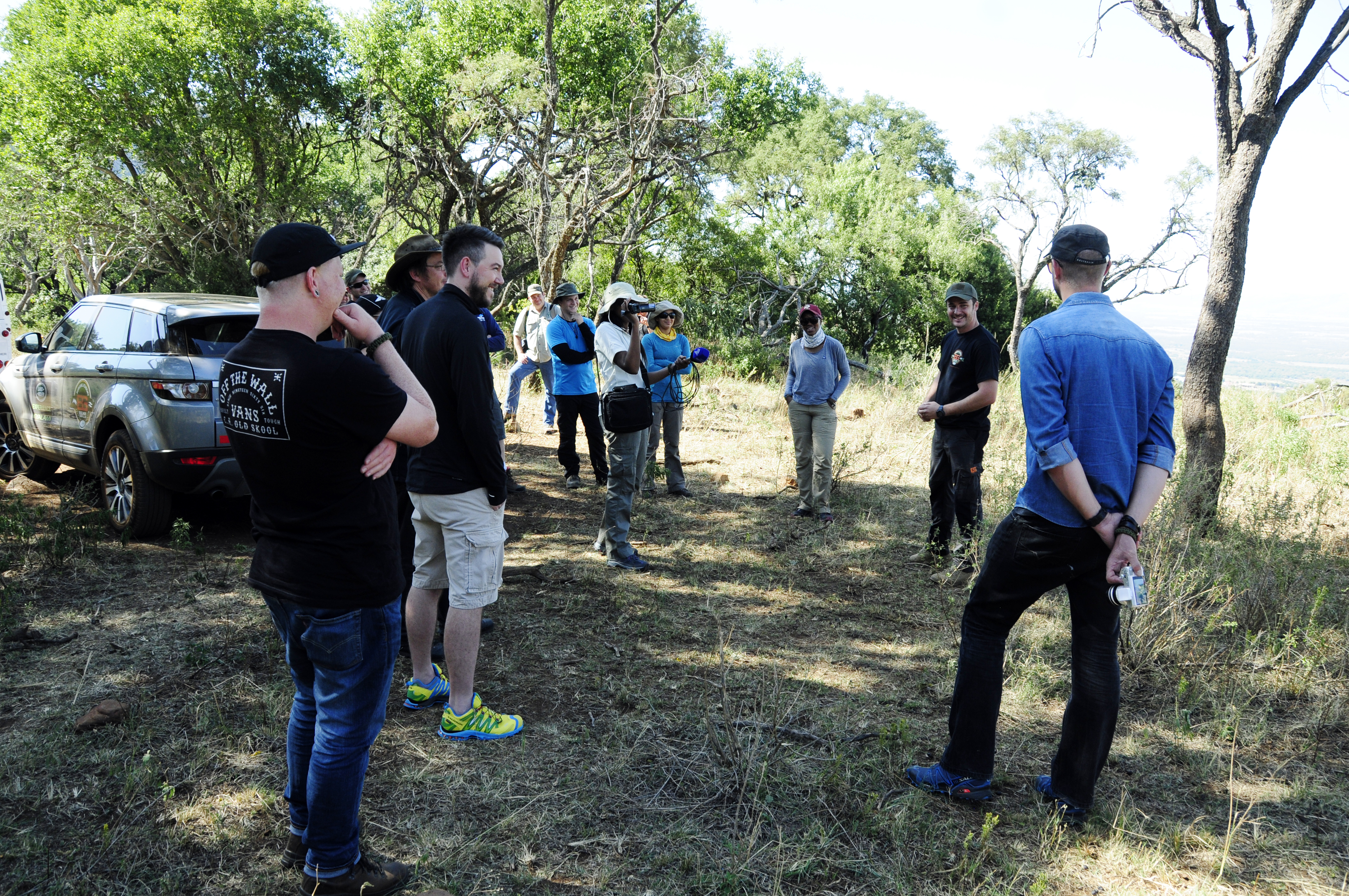
I’m not poking fun at the man himself, or the instructors on the course. They’re serious about what they do, and impart knowledge to course participants that literally enables them to save lives – their own and those of others. They are also current and former SA Special Forces operatives with access to implements and knowledge that could either save or maim you, depending on the requirements of the moment. But they’ve also lived by the code they’re teaching, surviving for months on extensive bush operations in the most challenging of situations, so the rest of us don’t have to. They also have the most fantastic nicknames, used to help protect their identities. You can scoff at taking instruction from someone called ‘Smurf’ if you like – but he’s just the kind of guy you want to help you navigate safely by the stars in the darkest night. ‘Crank’ can start fires at will. ‘Wings’ will show you how to cut a walking stick without nicking an artery. ‘Otto’ has the gun to protect the group from furry things with teeth. Stay close to Otto. Maybe make him some tea at your overnight camp.
Survival Basics
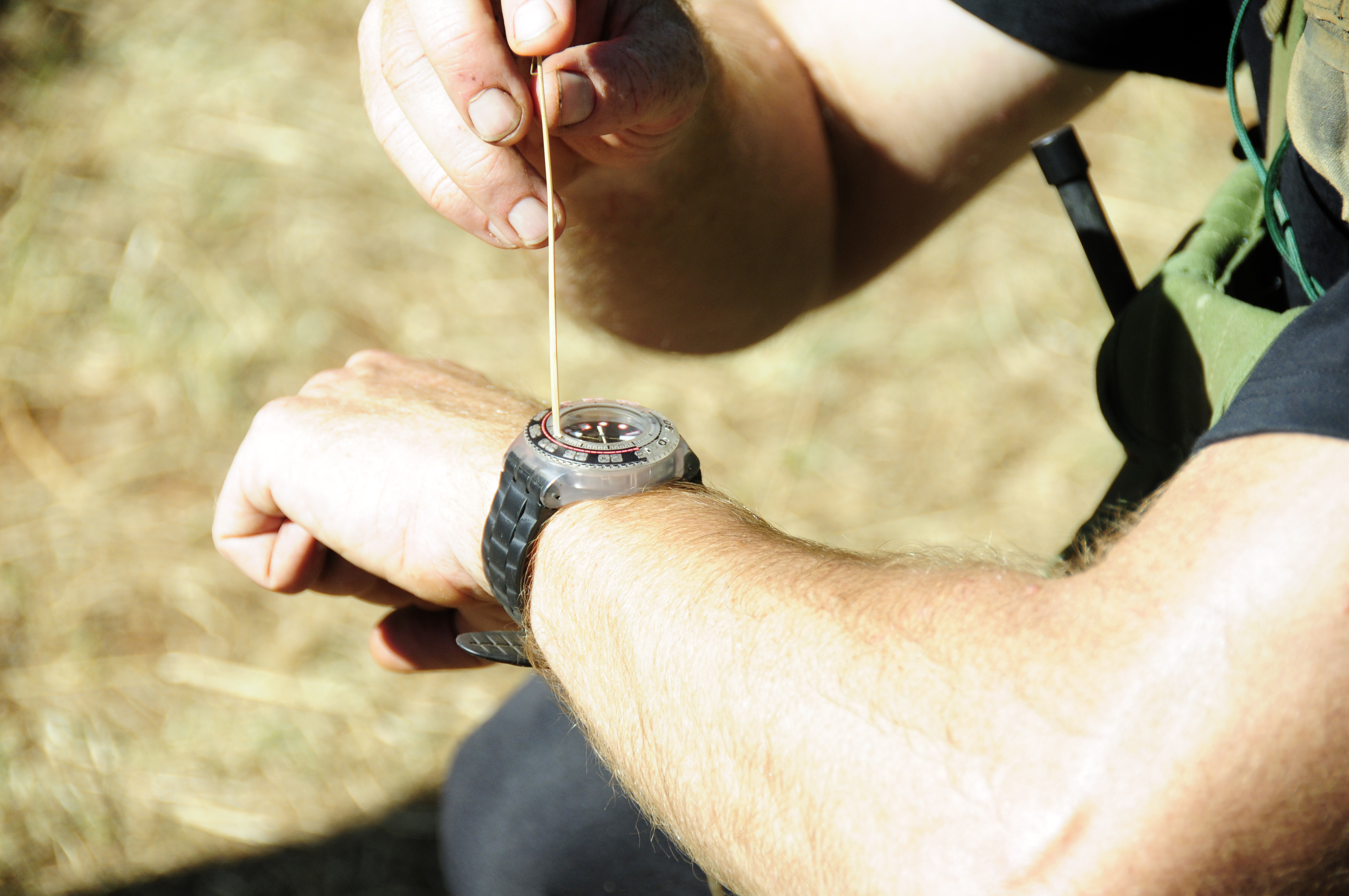
The course starts with basic situational assessment and navigational instruction. You’ll want to prioritise protection for yourself and your party, set up something to help rescuers find you, find a supply of water and start a fire – each have myriad steps and motivations, but keep to the code and you’ll have already set yourself up for at least a modicum of success. Then on to navigation – smug city slickers will pull out mobile phones with built-in GPS at this point. But what if there’s no mobile reception? No battery power? Smurf will show you how to determine magnetic north by charging a needle and floating it on a leaf in some water. Or how to plant a stick in the ground and mark off the shadow with a stone. Come back 20 minutes later, do some basic geometry, and you’ll be able to figure out which direction you should be heading to safety – or at least assistance.
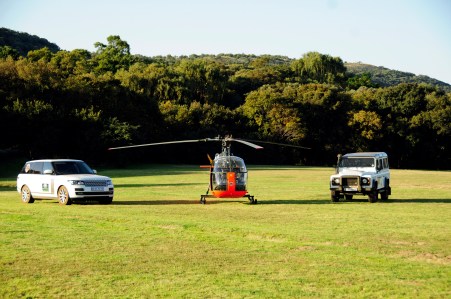
As I watch the fleet of glamorous vehicles from the Land Rover Experience Kyalami that ferried you to your mountainside location, drive off, I realize that things are about to get a little less comfortable. Back at the start point, everyone packed a backpack under the watchful eye of the team of instructors. Everyone’s well-stocked overnight bag is returned to their own car, mostly undisturbed. There’s no room in the backpack for that second fleecy top, or a stash of energy bars. I squeeze in a toothbrush next to the ominous BGSA knife lying on the groundsheet. Even a roll of toilet paper gets short shrift. Cardboard out – “nobody ever wiped anything with that,” quips Smurf – and squash the roll of ‘white gold’ to save space. A lone potato in each pack spreads fears amongst banting fans.
Setting off
Backpacks on and the walking begins, with instructions to keep an eye out for a handy, sturdy stick. The group fails its first test, minutes into the trek. Otto points out the remains of an animal carcass, tied to a tree while Smurf extols the virtues and uses – food, if not too far gone, and skin for warmth and water storage. It’s important to take in every aspect of your surroundings – you never know if something seemingly random is going to help play a role in your survival. It’s a bit like a computer game, but in a legitimate survival situation, there’s no ‘save game’. It’s amazing how quickly the group finds their feet – the bush is chest-high and ‘haak-en-steek’ claws at sleeves and backpacks. My own foam roll, perched atop my backpack, acquires a few ragged edges as I don’t duck deep enough under branches and rough branches gouge it.
After zig-zagging down the side of the hill via paths cut by animals, the group arrives at a good spot for another on-the-fly lecture. Wings drops some knot knowledge on us. I realise then that if I don’t pay attention, I may not make it through the weekend, never mind a hypothetical survival situation. I’m going to have to tie myself to a fellow group member tomorrow and euphemistically ‘do some climbing’. Not mastering a bowline could leave someone clawing fresh air at a pivotal moment. Basic knots covered, it’s time to unsheath the knife that had hitherto been simply ornamental on my belt. Wings covers the basics of knife wielding and talks about the features of the particular blade as the paramedic starts sweating gently on the periphery of the group. The knives are out and tested on the sticks we’ve all picked up along the way. Sharp intakes of breath signal a collective understanding of how careful we need to be. The paramedic is trying to play it cool, but looking around nervously for the first spurt of red. Fortunately Wings has already put The Fear into us. Nobody severs a limb and it’s time to move on.
The trek follows the contour of the Magaliesberg as we drop into the valley, with the instructors stopping to point out useful plants and grasses as we go. A clearing provides an opportunity to forage – a sheet of corrugated iron, some peppermint-type leaves that can be brewed into a tea and, tellingly, a ‘food drop’ of unmarked tins, some blankets and a parachute. Everything is gathered and split amongst the group as the hike turns uphill towards a second clearing.
Shelter Up
‘Crank’ is seated on the edge of a comfortable-looking lean-to shelter, in front of a fire as we wander into the campsite. Intimidated by the plush accommodation he’s built, we’re instructed to build our own shelter for the night using anything we have to work with. The temperature is dropping alarmingly and the sun is setting – and we still have more lectures to come. Tasks are divided and suggestions made – the shelter starts taking shape under the V of a split tree, with ground sheets, ferns and rocks outlining the place we’ll sleep this evening.
Reminding us of our survival priorities, the instructors halt constructions to demonstrate fire-making methods and how to set humane snares. The snares Smurf set earlier haven’t yielded any potential dinner. Luckily we have the cunningly-supplied cache of tinned goods, but it’s a reminder of how quickly things can get real. Headlamps start illuminating the campsite as the pace on the shelter’s construction picks up. Ferns are hauled in to create a springy mattress and the parachute is stretched across the branches as a roof. A careful glance at the instructors. They approve. We’re not totally hopeless.
A trio of guinea fowl – stashed carefully in a large box by the instructors – are humanely dispatched and prepared. Potatoes are produced from packs and rolled into the fire. A few heart-in-mouth moments ensue for the paramedic as tired hands wield sharp knives inexpertly to open cans. It’s a welcome meal at the end of a long day – curried beans and all. Smurf urges us to extinguish our headlamps and heads us on a short walk up the hill. The full moon makes life easier than usual, but the navigational mysteries of the stars are laid bare in simple terms and as night vision settles, we all realize that we’d actually be in with a shout of finding our way around in the dark.
Rough Night
It’d be unfair to say that the group is woken up at 05:30 the next morning, as a number of us had hardly slept a wink. Our triumphant shelter was never going to be big enough to house everyone, and those who opted for a night under the stars didn’t get a lot of shut-eye thanks to rocky ground, some well-founded, persistent thoughts about snakes and scorpions that like to cuddle and an awful lot of snoring – which is probably what kept away the scuttling and slithering things in the first place. Sleeping bags are stowed – with difficulty and a few muttered oaths. The corrugated iron sheet salvaged the previous evening turns skillet as eggs are produced, scrambled and subsequently inhaled.
The group sets off uphill. And further up. And up some more, until we’re greeted by a sheer wall of rock. We’re heading up. Helmets are handed out and a refresher course on knots is welcomed. After hoisting ourselves onto a ledge, we’re taken through a safety demonstration in clusters of three. “It’s not a climb, it’s a scramble,” is the apparently panic-quelling advice. I look up and the cliff face doesn’t so much tower over me as force me to lean back slightly in an attempt to see the top. I can’t. Fifteen minutes later, I’m hugging a boulder like a lost lover, standing on a ledge barely wide enough for my feet. My backpack is flirting with gravity and trying to tug me backwards. “Now is probably a great time to mention my fear of heights,” I mutter to Wings as he hops down to another ledge, ropeless and helmet-less to allow me to pass. I resolve to make it, purely so I can look up ‘scramble’ in the dictionary when I get home. After inching along and doing a Cleese-esque ‘Ministry of Silly Walks’ manouevre to get my right leg into something loosely-defined as a foothold, I’m up and out. The view from the top is reward for my volunteering to head in the first trio, as we wait for the other members of the group slowly make their way up. The nagging thought in my mind is: “We’ll have to get down again at some point”.
Survival Scenario
A subtle conversation with the paramedic about the treatment of snake bites is ended with a yelp from one of the instructors who’s already set off beyond us. There’s a quiet efficiency in the mannerisms of his fellows in stabilizing and treating what to all intents and purposes appears to be a snake bite. We’re all a little tired, but the phrase ‘snake bite emergency simulation’ does seem familiar from the course literature. We take instructions from Smurf and fashion a stretcher from those sturdy sticks we collected yesterday. The ones we carved notches in last night and used as supports for our shelter. Apparently a good stick is a vital survival tool. Remember that. The paramedic jabs an ominous-looking needle into the instructor’s arm and blood spurts onto the dry grass. We’re not sure we’re simulating anything anymore. A team assembles to carry him out, to flatter ground. We start a signal fire and stand in formation to signal a decent landing spot for the evacuation helicopter which has been standing by in case of emergency. The orange Alouette II rises above the mountain edge – you hear it before you see it – and swoops in to collect our prone instructor. He’s loaded into the back and the helicopter barrels away and we’re congratulated on an efficient emergency instruction. It was a simulation after all, but Wings is going to want a word with the paramedic later about that giant hole in his arm.
The group treks on across the flat top of the ridge, warned that this is ‘Puff Adder territory’ and using those sticks – now acquiring Swiss Army Knife-type versatility – to prod ahead of each footstep. The sun is baking down and we haven’t had much food, water or rest. The reality of a survival situation is getting more prominent. We could be doing this on no sleep, no food, no water, while having to carry injured people. Attention levels are at an all-time high.
After an interminable march, we arrive at another lecture station, to be greeted by the blissfully snake bite-free instructor. Blood still streaks his arm, but there’s no time for cuddles as he sets about teaching us how to make a meal out of mealworms (I assume that’s why they’re called that) and dispatch a scorpion safely. And then how to build a bush oven out of a termite mound, using our fire-starting knowledge, and cook the lot. Oh, and how to purify water with charcoal from the fire, a sock and some grass. He’s like Bear Grylls and Gordon Ramsay rolled into one. Important lesson: raw mealworms are reluctant luncheon material. Cooked ones taste like buttered popcorn. So best you learn to start a fire and cook things, pronto.
Decision Time
MasterChef Bush Edition done with, we march on and crest a ridge to see a crew clustered around some bakkies. Their presence marks the chance to make a decision – dump your very heavy, very damp backpack in the back and hitch a ride down to the foot of the hill, or dump your very heavy, very damp backpack, extract your gloves and harness, grab a helmet and abseil 50m down to the foot of the mountain. I’m torn between my all-clenching fear of heights and the thought that I’ve come too far in the last 24 hours to bail out now. Twenty minutes later, I’m walking backwards over the edge of a cliff. Just below the lip, the rope stops feeding through my right hand and I dangle, briefly. “Sorry, someone else was on your rope,” is the sheepish call from the instructor, above. Everyone’s a comedian.
A few minutes later, I’m sipping the world’s coldest and most welcome soft drink at the foot of the mountain, in the shade of a Range Rover tailgate. Each and every member of the group abseils down and as the numbers swell around the vehicles, so does the sense of accomplishment. Part camp-out, part vital lifesaving crash-course, I know now that I’ll stand at least some chance of surviving being stranded in the middle of nowhere. As long as I have my sturdy stick.
For more information about the Bear Grylls Survival Academy, visit www.group73.co/bgsa or ‘like’ Group73 on Facebook.
Key Survival Gear
- Make the most of what you find in your surroundings. Cars and planes can be broken up into parts for shelter, can provide water if you’re careful and can provide elements to burn as a signal fire.
- Sharp is good – if you have a knife, you’ll have a pretty good chance of surviving. The Bear Grylls knife comes with a variety of handy features, including a flint for starting fires.
- Potassium Permanganate – available over the counter at a pharmacy, it can be mixed with brake fluid or sugar to start a fire by chemical reaction or added to water to purify it for drinking.
- A sturdy stick. Support, navigational tool, spear and stretcher component – and if you’re desperate, firewood. Don’t say I didn’t warn you.
*This article originally appeared in khuluma.
Categories: Lifestyle
 wineoclock