The Scent of Revolution
The illusion of artisanality is a 21st century hallmark of brands which produce everything from cheese to beer and backpacks to clothing. ‘Hand crafted’, ‘curated’ and ‘bespoke’ are the buzzwords which attempt to bestow the illusion of quality, individuality and exclusivity on items in a bid to elevate their desirability and add a veneer of uniqueness. Amidst the hipster hype, it’s rare to find a truly artisan-driven brand with genuine history – especially one which stretches back over 220 years.
Parfums Lubin was founded in Paris in 1798 by the man widely regarded as the modern father of Western perfumery, Pierre-Francois Lubin. Lubin had started his apprenticeship under master perfumer Jean-Louis Fargeon, aged just 10. Fargeon was Marie Antoinette’s appointed supplier and the young Lubin used to hand-deliver scents to the Queen, himself.
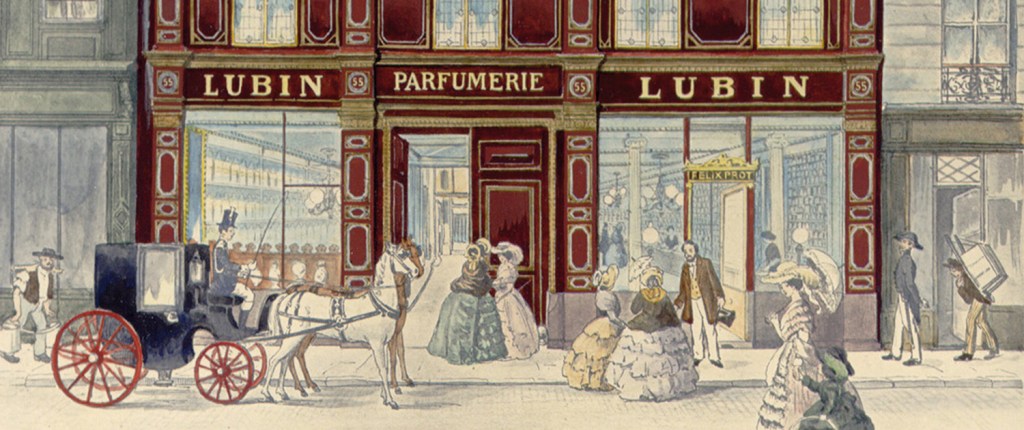
After fleeing the city during the French Revolution, Lubin returned to Paris in 1798 and opened his boutique quickly became a fashionable purveyor of scents to the dandies who emerged after the turmoil. He reestablished his royal connection when he was appointed as supplier to Napoleon’s wife, Empress Josephine and his sister, Pauline Bonaparte, earning the title of ‘Holder of the Beauty Secrets of the French Court’ when the Bourbons returned to power in 1815. Within the next 8 years, his scents were favourites with King George IV of England and Tsar Alexander I of Russia and his global fame grew.
When Lubin’s own apprentice Felix Prot took over the business in 1844, he continued to build the brand’s international legacy and opened Europe’s first large-scale perfume factory, while faithfully maintaining Lubin’s traditional production methods. Control of the brand eventually passed to Prot’s sons, who expanded the empire to the United States, and rode the wave of the Great Depression and through the Second World War. When a third generation of Prot sons took over in 1945, they re-energised the brand with a scent inspired by Grace Kelly.
By the 1960’s, the company was sold to an industrial group and declined before falling into neglect and it was only in the mid-1990’s that Gilles Thévenin – then employed by Parfums Rochas – realised that the corporation owned the Lubin brand and lobbied to revive it. When the opportunity to purchase it came up after several years, Thévenin leapt at the opportunity to re-establish the iconic brand and set about returning its lustre. Gathering together Lubin perfumers from the 1950’s and 60’s to reconstitute lost formulas and with two of the next generation of Prot sons on the Board, Lubin made its re-entry to the global perfume stage with two of the fragrances which made its name – Nuit de Longchamp and Gin Fizz.
Today, the brand operates from a small boutique in the heart of the trendy Saint Germain des Prés district in Paris, steps from Église Saint-Sulpice and maintains its heritage by producing small quantities of its fragrances on the back of sourcing the highest-quality and rarest ingredients in the world of perfume. “It’s a paradox to say that the brand is both an historical institution and a very small company at the same time,” says Thévenin. “Our limited production allows us to use the scarcest ingredients, because we need only small quantities of them. On average, a Lubin perfume is produced in a quantity of 2 000 to 3 000 bottles a year – and sometimes far less. Though the sourcing of scent components is not easy – and quite expensive – it’s possible. We couldn’t produce some of our fragrances anymore if our need was 5 or 10 times that figure”.
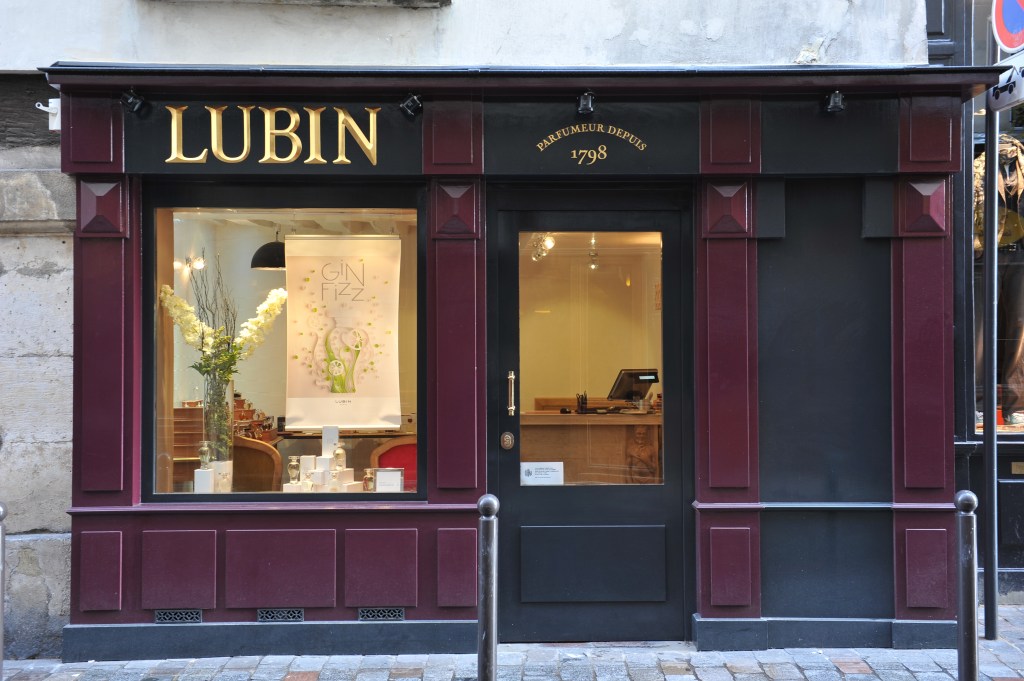
Thévenin and his team of just four perfumers travel the world in their quest to track down the purest and rarest components of their fragrances – top-quality Oud oil can retail for over R400 000 a kilogram and only the finest Grasse Rose Centifolia and Jasmine, and natural balsams like Oliban and Labdanum are considered worthy.
The prestige of the brand runs through every element – the beautiful, intricate bottles which only enhance the fragrances’ desirability are produced by Picardy-based Pochet et du Courval, originally founded in 1623 and which has been supplying Lubin’s bottles since 1807. Thévenin has recently tracked down a small printer in Bordeaux who uses 18th century machines and hard-to-source materials to produce elaborate embossing work which no modern printer can replicate, for the fragrance’s boxes.
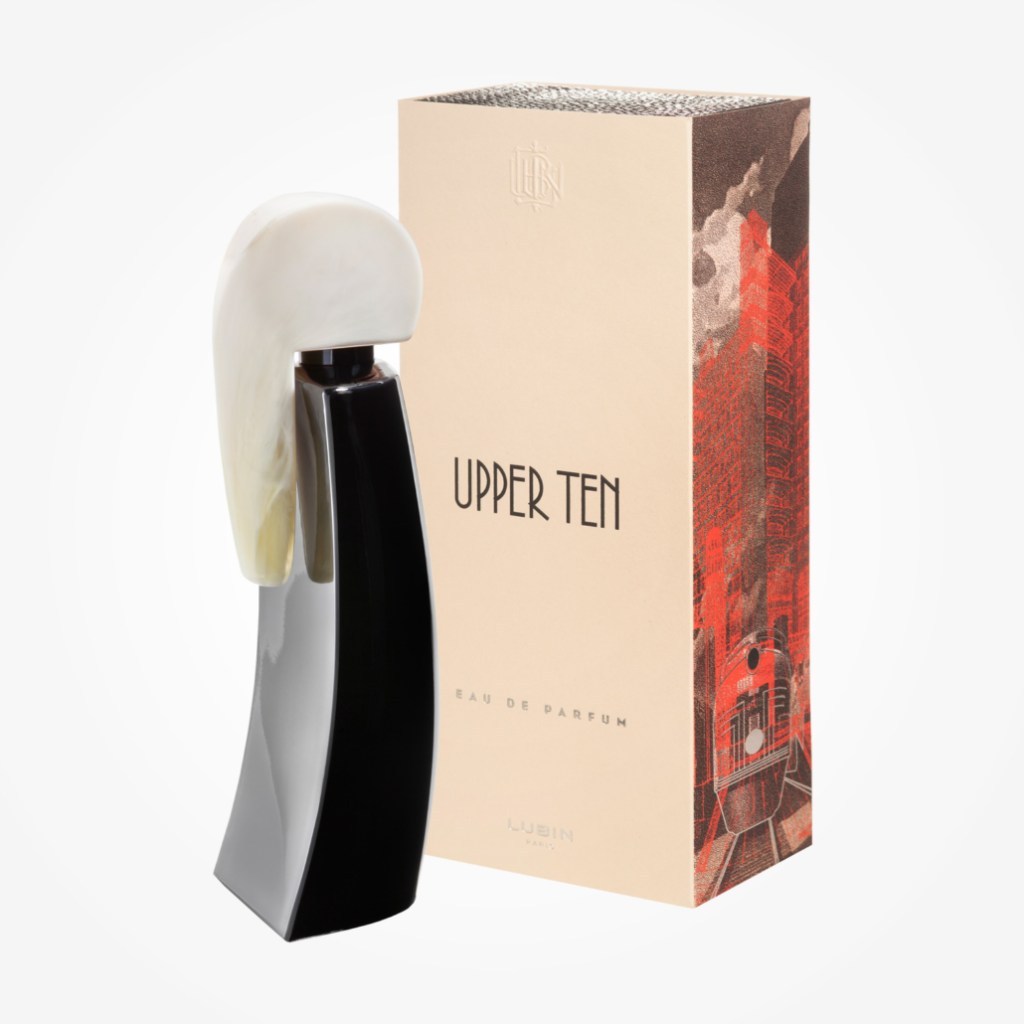
While still producing fragrances with roots in the brand’s 18th century origins – including Marie Antoinette’s personal favourite, Black Jade – Thévenin is picking up where the Prot brothers left off in the 1960’s and continuing with the internationalisation of the brand, blending specific fragrances to target Middle and Far-Eastern countries. “The Middle East, and particularly the Gulf region is an incredible market – the tradition of perfumery there dates back to the Egyptian and Mesopotamian Antiquity: about 5 500 years ago,” he says. It’s a challenge to be confronted to the taste of those populations, because they are both very discerning and knowledgeable, as far as perfume is concerned. They love Oud of course, but also spicy woody fragrances, deep oriental flowery notes, and strong flowery-spicy accords. It’s a new world for me – almost another planet – and very thrilling”. The new range of fragrances has taken more than 3 years to develop, and Thévenin have hopes to launch the first of them before the end of this year.
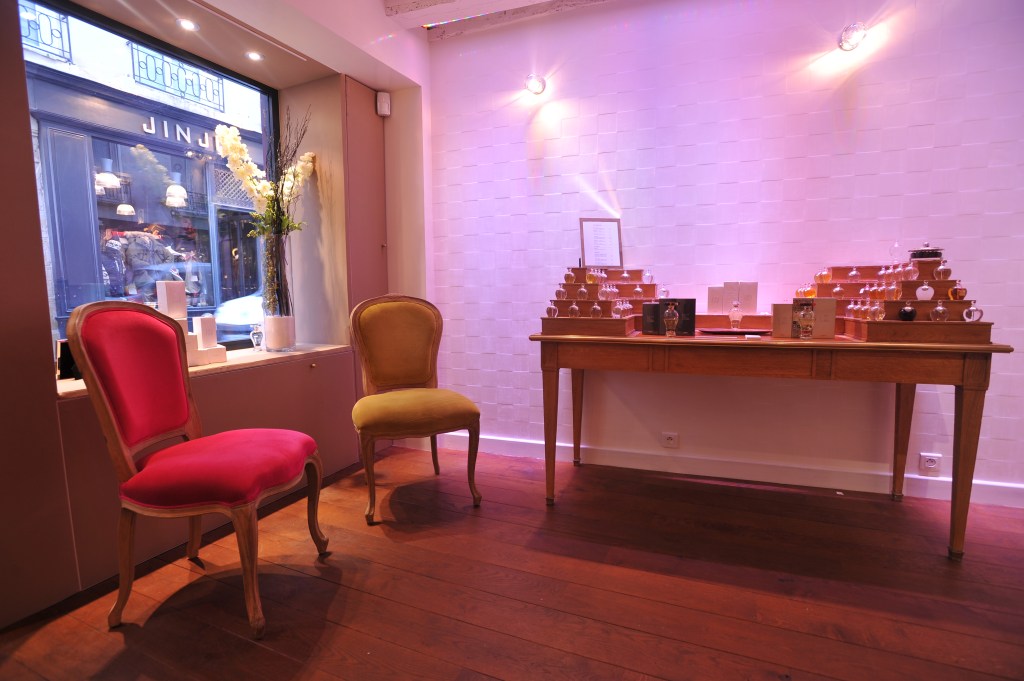
Parfums Lubin remains an icon of nobility and authenticity in the truest sense of the word, in an industry with its focus more on the bottom line, than the bloodline. Visit www.lubin.eu/en for details and a whiff of history.
*A version of this story appeared in the September 2018 issue of Private Edition.
Categories: Lifestyle
 wineoclock
Great story, Trevor. A true heritage brand indeed!
LikeLike