Finger Sports
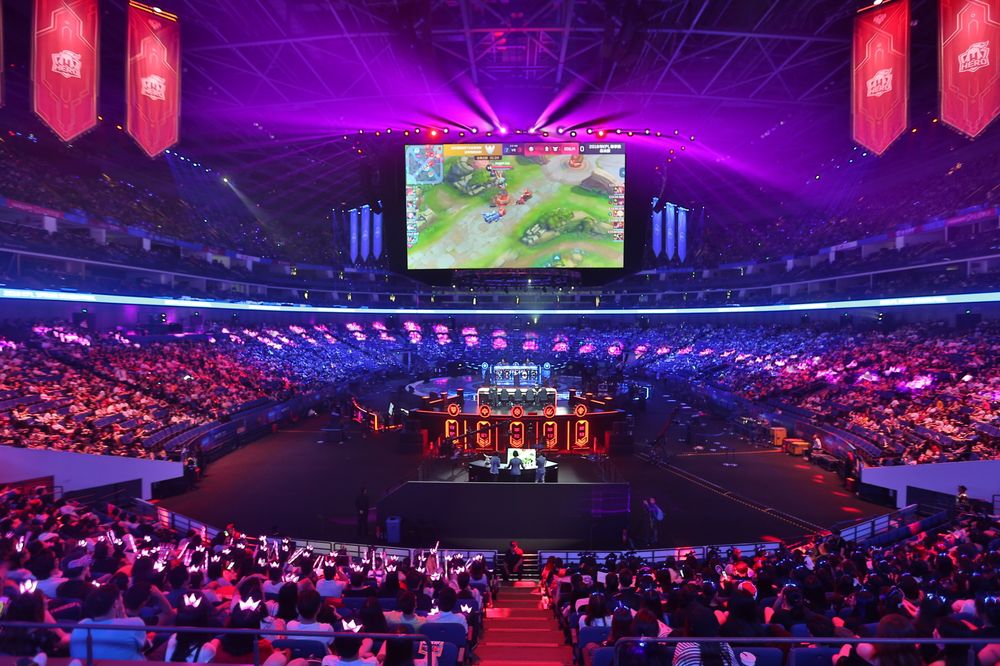
The atmosphere amongst the twenty thousand fans crammed into the arena crackles with an electric charge. Many of them, wearing the colours of their favoured team, have travelled thousands of kilometres for the opportunity to witness the epic match. Statistics about their teams’ matches on the road to this point are exchanged, praised and picked apart by fans in the grandstands and television analysts broadcasting the pitched finale to several million viewers from around the world.
Anticipation builds as the start time draws near – for the teams in the warren of rooms beneath the stadium, it’s a final chance to run through their drills and plot the attacks and parries, perfected after thousands of hours of practice and painstaking video analysis of their opponents’ game strategies.
The arena lights dim and the big screen lights up with the team badges, drawing a roar from the crowd. The superstar-packed teams appear, and the sound level increases by several decibels, with the commentator bringing them out under the whirling, spinning lights. Titles, money, pride and bragging rights are at stake, before an audience of millions – it’s time to play.
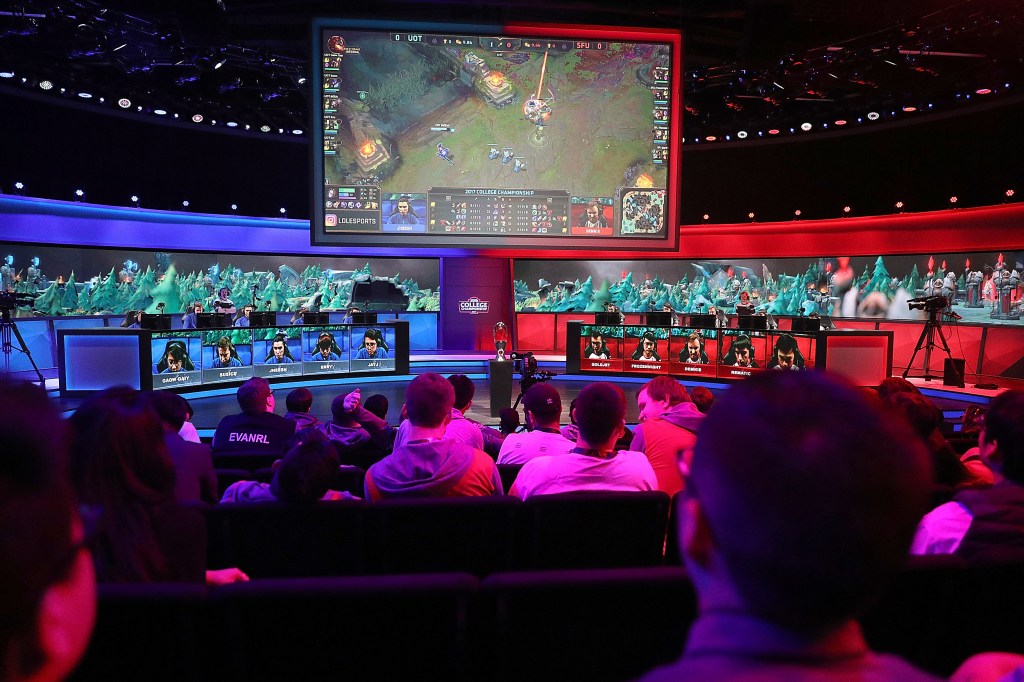
The atmosphere is familiar – but the game may not be. There’s not a bat or ball in sight and the pitch is demarcated by two banks of monitors and controllers, rather than white touchlines and goalposts. This is eSports – competitive gaming – and it’s a massive global phenomenon which drew an audience of over 380 million viewers and generated $905 million in revenue in 2018, awarding prizes from a total pool of $24.7 million in the USA alone – more than the NBA ($13 million), Golf Masters ($11 million) and Confederations Cup ($20 million).
Home Game
The eSports industry in South Africa may not yet be filling massive arenas with fans and drawing multi-million dollar sponsorships, but it’s fairly well-established, with internationally-competitive professional teams with dedicated followings from loyal fans. Barry ‘Anthrax’ Louzada was one of the country’s first competitive gamers, and is the Co-Founder of Mettlestate, the premium eSports authority in SA.
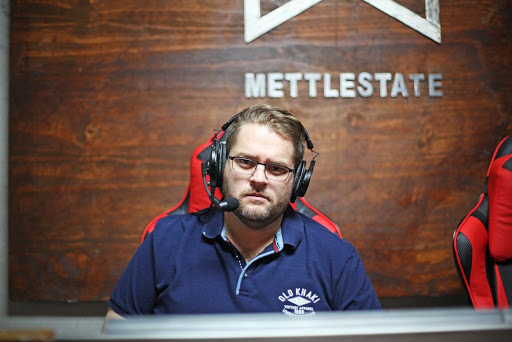
Barry started gaming at age 19 when he was given an old office PC for his birthday, which he used to play football FIFA 99 – and was immediately hooked. He made the leap into competitive gaming in 2003 at the Carousel Casino, with a game called ‘Wolfenstein Enemy Territory’, with the scene still in its infancy. ‘Competing used to be a really long and work-intensive process. Packing up your PC – no small task back then, considering the size of the thing – and having to transport it across the country was not fun. Tournaments ran in scout halls or in boardrooms that people had organized at their offices. Access to internet was still something of an anathema, so local LAN was where it was at,’ he says.
Goliath Gamers
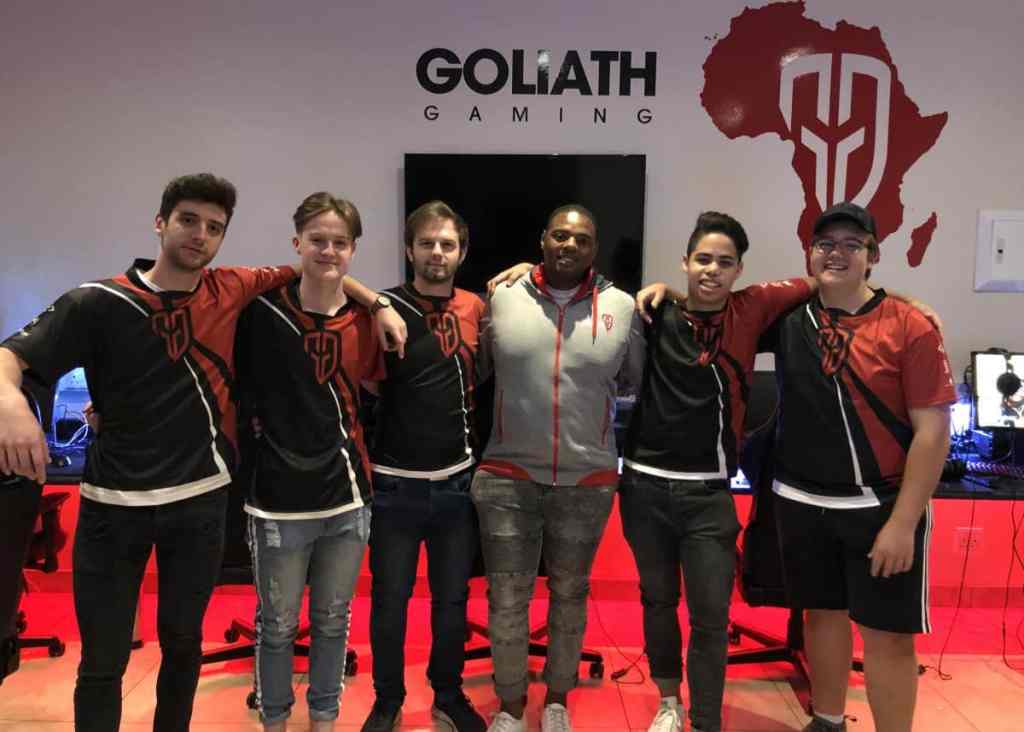
Michele ‘Stickalish’ Brondani and Ashton ‘Golz’ Muller are former competitive eSports players and now co-own eSports team Goliath Gaming. Their stars include 16 year-old FIFA player Thabo ‘Yvng Savage’ Moloi, who placed first out of 1 024 participants at the VS Gaming Festival last year and picked up a R400 000 prize; 20 year-old FIFA player Julio ‘BEAST’ Bianchi who beat double World Champion Agge at the FIFA eWorld Cup Global Series Qualifiers in Amsterdam – where only the top 64 FIFA players from around the world qualified from 20 million participants – and Starcraft player Edwin ‘Drager’ Williams, who won the WESG Africa qualifiers to represent SA in StarCraft at WESG in China in early 2018.
eKasi eSports is a multi-gaming organisation that fields professional players, who compete locally and internationally Gabriel Ramokotjo is one of the co-founders of the first accredited eSports club in Soweto, established in 2017. ‘The desire to make an impact to on gamers from underprivileged background laid the foundation for us to start Ekasi Esports,’ says Gabriel. My partner and I resigned from our corporate jobs to start the company and sought out the best eSports players in the township, as we believed that there was huge potential that had not been tapped yet. We started with the CS:GO team first, as we wanted to begin with a highly-competitive game, giving us an competitive advantage in building the brand’.
Louzada says that the local industry is still some way behind the international scene, but feels that it’s only a matter of time before it explodes in a big way in South Africa. ‘I think the best way to describe the local eSports community would be to say that we are passionate. The community is a space where people support each other and are always on hand to offer advice and discuss every facet. Contrary to popular belief, the community is an extremely social and interactive one. I’ve formed lifelong friendships with people down the road and on the other side of the world through eSports – the spirit is amazing,’ he says. Ramokotjo concurs: ‘While South Africa’s eSports scene still has a long way to go to rival the overseas industry, a lot of hard work and passion resides here and incredible strides are being made in raising developing the industry. With local brands steadily getting involved and passionate local organizations and individuals spreading the word, the future is bright for South African eSports – we think things are really going to explode within the next 5 years’.
Prize Purse
There are a host of local tournaments, but the biggest include the VS Gaming Masters where the 8 top DotA2 (Defence of the Ancients) teams compete for a share of R1.85-million and a FIFA tournament with a prize pool of over R1.3 million and a qualifying spot for the FIFA eWorld Cup Global Series Qualifiers in Amsterdam up for grabs. Mettlestate also hosted a qualifier at the end of 2018 where one South African Team in each of the four gaming titles (DotA, CS, Starcraft and Heartstone) won a spot to compete in the 2019 World Electronic Sports Games in China in March 2019, where they’ll compete alongside the best for a prize pool of $5.5 Million. Local companies are warming to the idea of the eSports industry, with one of the biggest contributions to date, a R10 million investment in Mettlestate by prepaid cellular services company Smartcall, which will be used to create and host various leagues consistently over the next few years.
One of the barriers to the growth of the industry in SA is access to the internet – in terms of cost and availability. Louzada says that gaming hardware can also be expensive, but that competing on an international level in any sport, draws similar costs. ‘To develop our teams, we really need international exposure, which we lack at the moment,’ he says. ‘The way forward is for us to get more access to international events and be able to play against teams that we can learn from and thereby, gain more experience’. Ramakotjo agrees that access to broadband connectivity is a major issue, calling it ‘the lifeblood of eSports’. ‘Without it, games cannot be made, players cannot compete with each other and there is no connection with the massive global audience of millions who watch tournaments via online streaming services,’ he says.
Perfect Preparation
Practice time and dedication are key components to success in any sport – and it’s no different in eSports. ‘A good player also has a really good understanding of the game that they are playing. The ability to solve problems quickly and be aware of the ever-changing in-game situation are also important – and that’s something that gets fine-tuned the more you play and the better you understand the game,’ says Louzada. Being able to work well within a team environment is also crucial – it is a team sport, after all.
As with any sport, injuries can hamper players’ progress. Brondani says that Carpal Tunnel Syndrome (pain, numbness, and tingling in the hand and arm, caused by the major nerve to the hand being compressed as it travels through the wrist) is common, but that professional eSports players also have issues with mental and physical fatigue from practicing and competing, with burnout from travelling and playing in tournaments around the world also a major contributor to many players calling it a day while still relatively young.
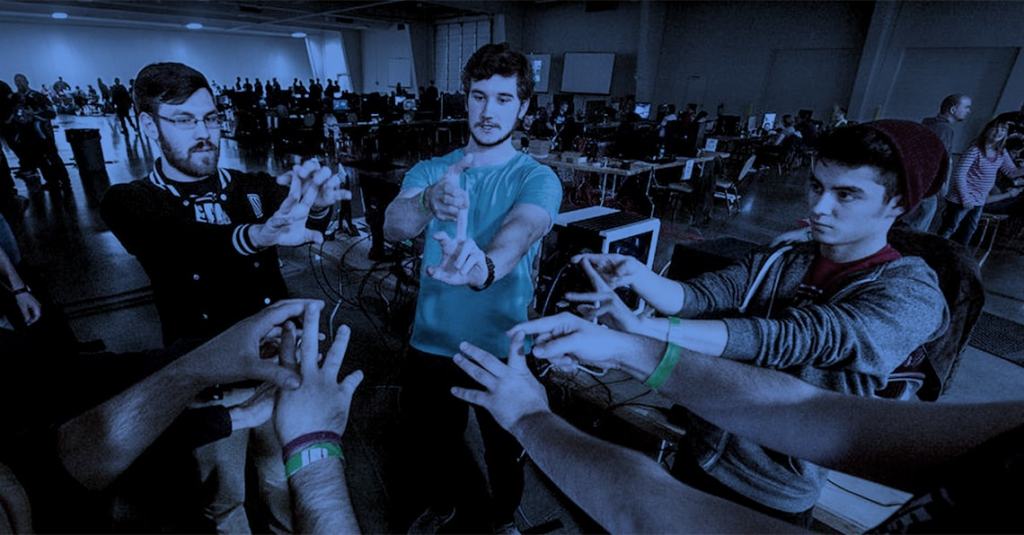
eSports is one sporting code in South Africa which doesn’t suffer from a diversity problem. ‘In gaming, it doesn’t matter what colour your skin is, what your gender is or whether you have a disability or not – you can still play,’ says Barry. ‘At the moment, I am playing a game as a female explorer, adventuring through the jungles of South America. There is no diversity barrier to gaming. You can be whoever you want and do whatever you want – the only limitation is the game itself’. Muller says that for some people, gaming is also an escape of sorts from issues in their personal lives – something which the eSports community is also a great sounding board for. ‘While there are female eSports players, we really we need more leagues to be developed that encourage not just women, but more people from diverse backgrounds, to consider eSports as a career,’ says Ramakotjo. Now you know – gaming can be a career…
Get Involved
Barry Louzada’s advice is to start by watching local and international events online, to get a feel for the games and the action. ‘Then, attend live events if you can get to them so you can get to know the scene. You might surprise yourself and find out that you are pretty good at a game you never expected to play’.
Muller’s advice is to join some of the SA gaming Facebook groups for relevant titles and keep an eye out for anyone looking for players to join their teams. The alternative is to put in enough practice and develop skills to the point where existing teams start to notice who you are and they’ll approach you – or start your own team!
*A version of this article appeared in the January 2019 issue of khuluma.
Categories: Tech
 wineoclock