Scissor Psychology
‘Getting a dress designed is as much about how it makes a client feel, as how it makes them look,’ says Leopard Frock Creative Director Lezanne Viviers. ‘There’s a lot of EQ (emotional intelligence) involved in designing an outfit’. Understanding that people look good when they feel good has kept Leopard Frock founder Marianne Fassler at the gleaming scissor tip of South Africa’s fashion industry for almost four decades – and it’s something everyone on her team understands implicitly.

That word, ‘team’, keeps coming up, no matter who at Fassler’s Saxonwold studio you talk to – almost as often as key phrase ‘Anti-Fashion’. Neither of those seem to point towards a winning recipe for a successful clothing label – in the mind, at least, of someone for whom ‘fashion’ entails grudgingly buying collared shirts as part of a middle age-inspired mission labelled ‘dress like a grown-up’. The workshop and studio are a hybrid of creative hub, production line, collaborative space, shop window, fitting room, office – and, occasionally, psychologist’s couch. ‘People bring all their baggage when they come for a fitting, and we need to make sure that their outfit puts them in the frame of mind they need to be in,’ says Viviers. ‘If you have a big event you need to dress up for, the anxiety over your outfit and how you look in it can spoil it for you completely – so we’re here to make sure our clients look and feel as good as they possibly can, so they can enjoy themselves,’ she says.
Magical Multitasking
The Leopard Frock team’s ability to multitask is actually what makes Fassler’s designs work. If you’ll forgive a brief generalisation: if you were dressed by an artist, you’d look like a paint splatter; if you were dressed by an accountant, you’d look like a spreadsheet and if you were dressed by an assembly line, you’d look pretty much like the rest of the products. It’s the way Fassler and her team juggle the combinations of those roles to run a business, that’s made her one of the continent’s most sought-after designers for those seeking creative expression through form and function in fabric. Forget the image of flighty fashionistas flouncing about in flowing robes and colluding to conjure increasingly-ridiculous trends – this is a serious business for a group of people whose livelihoods depend on their ability to make their clients look and feel good. Creative expression is evident in everything from the studio’s front gate to the whimsical stick figures drawn on the office noticeboard by a new staff member struggling to put names to faces – but the bills must be paid.
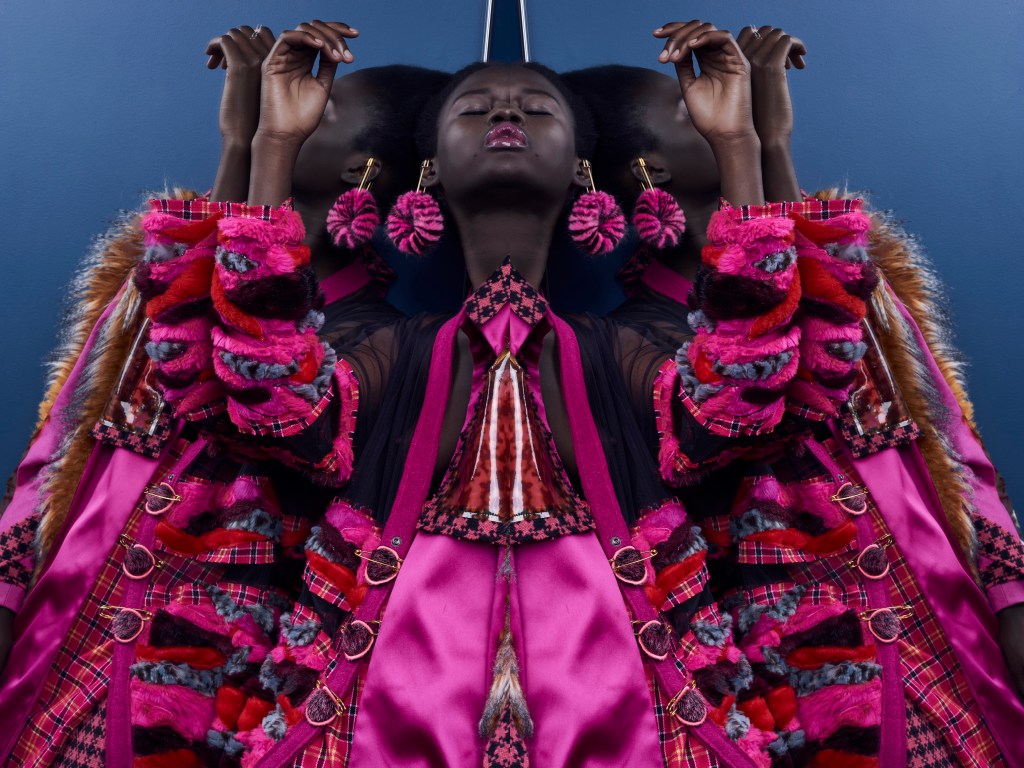
While Fassler and Viviers delicately drape an implausibly willowy client in a variety of skirts and dresses and vote or veto the result, couturier John Hockey is all precision scissorwork and attention to detail at the oversize desk adjacent to the fitting area. ‘I was at college with Marianne,’ is the ‘I dare you to ask me for a number’ response to a question about how long he’s known the grand dame herself. While Fassler oversees the brand and Viviers is responsible for, amongst other things, seasonal collections for fashion shows like AFI, Hockey is responsible for bringing to life the brand’s sensational one-off creations, including their signature wedding gowns and evening wear.
Perfection Personified
Muttering under his breath for cutting a length of velvet the wrong way earlier (apparently there’s a wrong way) and having to delay the construction process of an evening gown to go out and buy a second length of matching material, Hockey sighs deeply in response to the question ‘what do you wish people knew about fashion?’ ‘How long it takes to actually get made once it’s designed,’ is the response. Generally, a client comes in with an idea in their mind of the kind of bespoke outfit they’d like. The team consult to try to balance perception, reality, time and cost to deliver a product that measures up to the brand’s reputation and delivers on the client’s expectations. It’s Hockey’s job to take the product from sketch to reality. ‘I get joy from interpreting an idea – sometimes just a thought or a line or two on a piece of paper – into a finished garment and watching a client’s mood change instantly when they see the way they look in the mirror,’ he says. ‘Sometimes you have to call a spade, a spade, though – if a client doesn’t look good, it’s my job to tell them and to fix it. If we can’t agree, I won’t make a garment I’m not happy with’.
In another room – as visible to visiting clients as the rest of the operation – a team of ladies industriously sews, stitches and steams the brand’s ‘ready to wear’ range. More ‘clockwork’ than ‘rote work’, the hum of sewing machines and hiss of steam irons counterbalances Hockey’s staccato snipping and Fassler & Viviers’ near-telepathic verbal shorthand as they style another client as her mother looks on. ‘I have some clients who’ve been buying my clothing since the ‘80s, and now their daughters and granddaughters are coming in and still loving the clothes,’ Fassler tells me later. ‘What we create is not for an age group – it’s for a mindset. I’d like to think people come here for the clothes and vibe – but I think really it’s the added value where we can make changes on the spot to suit the client – whether they don’t want to show their arms, would prefer a different lining or crave an extra layer of detail.’
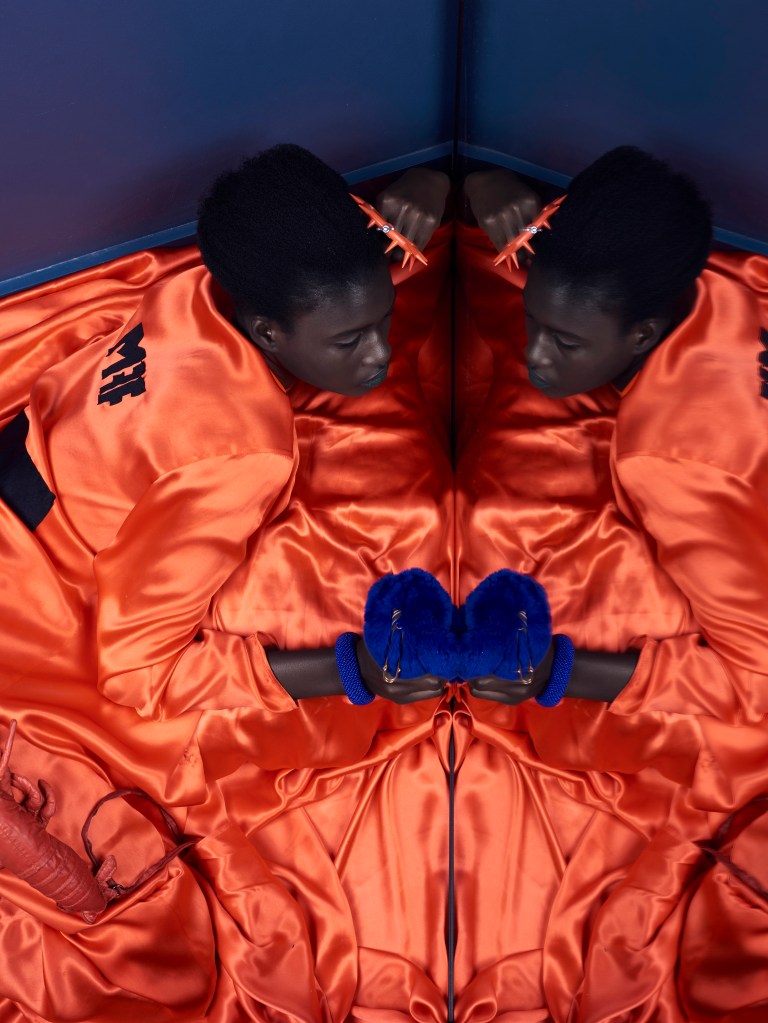
Next to the desk where Hockey slides pins into green velvet, is a filing cabinet with a long-cold, lipstick-ringed mug of tea resting on it and a dress embroidered with a geometric tree shape, hanging from the top drawer. ‘Our signature is totally intuitive, really great, handmade clothing,’ says Lezanne, fingering the felt shapes on the dress, having sent mother and daughter clients home, happy. ‘Material is expensive, so we don’t throw anything away – we’d rather test ourselves and see how we can reconstitute the off-cuts and turn them into something beautiful and unique. This has become part of the handwriting of the brand: delivering a unique item from something that might have been thrown away’. ‘We’re basically architects working to a set form,’ chimes in Hockey. ‘We work with human bodies of all sizes, but the basic form of the canvas is generally the same’. Viviers agrees: ‘Design is problem solving – people bring their bodies and their baggage and you have to find solutions that make them look and feel amazing’.
But Is It Art?
So since they’re fundamentally creating one-off pieces of wearable design and art, how do they know how to price things? ‘We’re an artisanal brand and all our work is handmade, so we need to price things according to how much time it takes to craft something beautiful, factor in the cost of importing all the fabric and then balancing that with what someone will be prepared to pay,’ says Viviers. ‘I didn’t want to sell the last dress because I liked it so much, but I sold it to that client because she looked amazing in it, she wears it beautifully – and I really like her’.
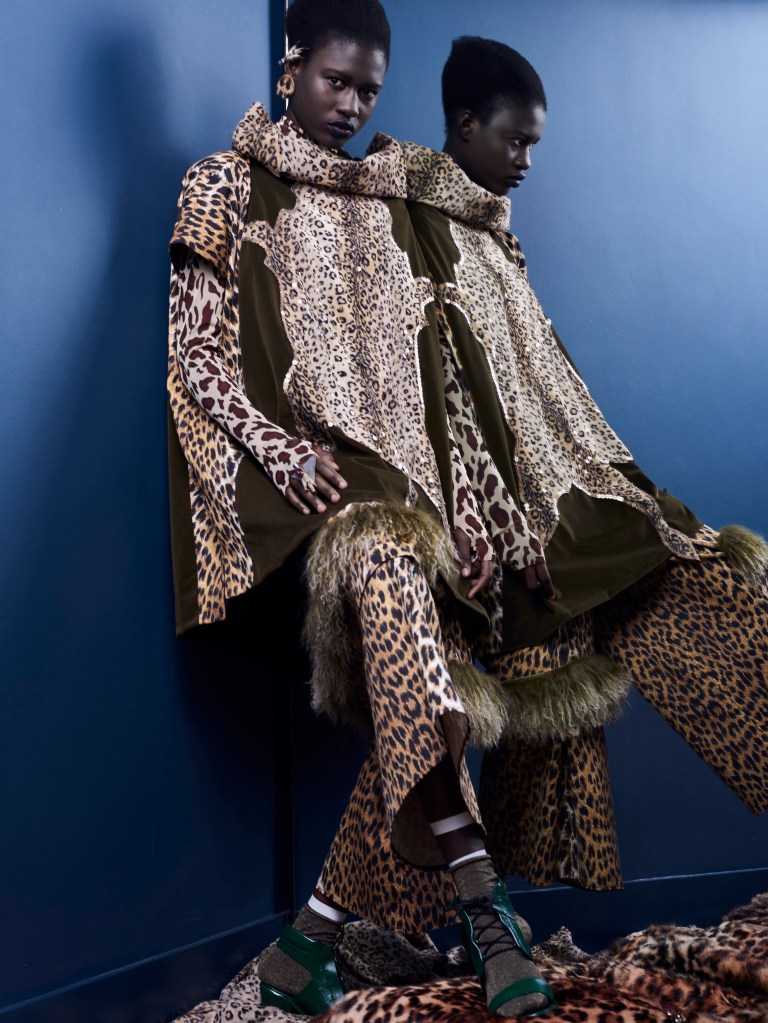
When Lezanne describes the fun, collaborative creative process of design and production as ‘half play, half work’, John scoffs. ‘1/10th play, more like!’ he says, frowning at the troublesome green velvet. ‘I don’t like the technical things – how a garment is finished or stitched is up to someone else – I want to find a way to bring one of those ideas to reality,’ she says, as Hockey delicately skewers an errant velvet dimple. ‘There are always solutions – if you’re under Fashion Week pressure and a dress isn’t coming together, put it aside. As you go along, you’ll come up with a new process for something else that will solve your initial problem. Adaptability is important’.
So Team Leopard Frock is creative, collaborative, inclusive, intuitive and happy – but is that par for the course in an industry widely perceived as fairly fickle? ‘We’re lucky to work in a space where everyone’s opinion is valued – but there’s no space for ego,’ says Lezanne. ‘There are plenty of insta-famous “fashion fans” out there who claim to be part of the industry, but add no value. Social media creates the illusion, but few want to put in the hard work required to get to the top. It’s easy to give up halfway – but your client isn’t going to look glamorous in a half-finished dress’.
*A version of this article appeared in khuluma.
Categories: Lifestyle
 wineoclock