The Economics of Exponential Organisations
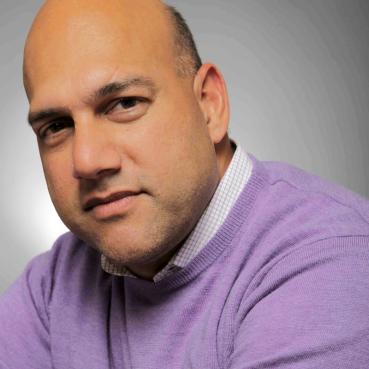
“I’ve come to detest the word ‘innovation’ because people throw it around without knowing what it really means,” says Singularity University Founding Executive Director Salim Ismail. “Anything really innovative is really disruptive. If its’ not, it’s incremental – that’s just improvement. Disruption radically changes the game”.
Disruption is something Ismail has a deep knowledge of, as Singularity University was established with the goal to ‘educate, inspire, and empower a new generation of leaders to apply exponential technologies to address humanity’s grand challenges’. The organisation has empowered people from more than 85 countries to apply exponential technologies – things like artificial intelligence (AI), augmented and virtual reality (AR, VR), data science, digital biology and biotech, medicine, nanotech and digital fabrication, networks and computing systems, robotics, and autonomous vehicles – to more than 100 startups and countless patents and ideas. Prior to that, Salim was a Vice President at Yahoo, where he built and ran internal incubator Brickhouse. He has founded or operated seven early-stage companies including PubSub Concepts, which laid some of the foundation for the real-time web, and his last company, news aggregation startup Ångströ, was sold to Google in 2010.
Change the Economics
He says that existing companies struggle with the radical changes demanded of them by the rise of exponential technology because their underlying business model is based on scarcity, while digital technology in an information-enabled society automatically creates abundance, which newer companies are better-placed to capitalise on. “In most cases, businesses have been optimised around scarcity and geared for efficiency and predictability with standardised supply chains and the like,” he says. “Without scarcity, there’s no business – and some industries, like luxury goods and diamonds, are even based on artificial scarcity. Now, a company like Airbnb comes along and works by tapping into an abundance of spare bedrooms around the world, information-enables them and creates a business model around exposing the asset. Think Uber with cars and Waze with people’s smartphones – it’s about abundance”.
The economic thesis behind these ‘Exponential Organisations’ – or ExO’s – is that the marginal cost of supply is cut to zero, or almost zero, by abundance. “The business world has traditional been concerned with managing the costs of supply and demand – and being on the right side of that equation to be successful,” says Salim. The arrival of the internet and digitisation has allowed us to drop the cost of demand generation. Every Silicon Valley company is looking for the holy grail of a viral loop in which your acquisition costs go to zero – for the first time in the history of business, you can acquire customers at no cost. Creating a business with a marginal cost at zero in an industry with high costs, is an existential threat to any incumbent and its the reason the market cap of these ExO’s goes crazy – there’s near-zero marginal cost of supply and near-zero marginal cost of demand, and yet they’re generating real revenue”.
Dragging business into the 21st Century
Ismail has pioneered what he calls ‘ExO Sprints’ – a ten-week programme that moves an organisation’s management & leadership culture 3 years ahead. Having piloted the Sprints with Proctor & Gamble, he’s subsequently run them with a dozen other global blue-chip companies and is adamant that every one of the global Top 5000 companies has to go through the process. “The opportunity cost of not moving your culture three years ahead of where it is now, is incalculable,” he says. “If you aren’t doing it, your competitors probably are”. The ExO Sprints don’t just digitise a business from its 50+ year-old foundations – something Ismail says is simply impossible – but rather create totally new lines or a new business model and build them out separately on the fringes of the existing business, to create a new market. It’s something he was surprised to struggle with at as young and innovative a company as Yahoo, where every time the incubator came up with something radical, the ‘immune system’ in the parent company attacked it.
Looking at ‘the Eskom problem’ in South Africa, Salim says that the global energy sector is the field most ripe for disruption in the next ten years, with solar power technology on a doubling pattern every 22 months, and having ridden that wave for the last 40 years. “If we have the courage to ride that curve – and why shouldn’t we, as Moore’s Law has been in effect for over 60 years – we can deliver 100% of the global energy supply with solar in the next 12 years,” he says. “In 5 years, battery tech will have caught up with solar tech and that makes the current utility business model disappear – it becomes the backup, rather than the primary supply”.
He’s been campaigning to the Canadian government for years because 40% of the country’s exports are based on oil – meaning that the basis of their economy will disappear in the next ten years. “Eskom have the same problem – their old-style thinking says ‘we need to generate X amount of power and we do it via coal or nuclear, so let’s keep building more power stations. That’s the fundamentally wrong answer. We know that in 12 years, they’re facing a ‘free’ business model, so they should be aiming to develop the services they can offer the new market – home energy conservation, smart metering and the like”. Salim is optimistic about Africa as a whole, because he says that while the West and Europe have to ‘unlearn’ 50 years of management practices, our continent is perfectly-placed to leapfrog straight to ExO status – as we’ve largely done in the switch from landlines to mobile phones.
Building Entrepreneurs
He says that a major part of inculcating an entrepreneurial culture in South Africa is about changing the social ramifications of entrepreneurship – and particularly, entrepreneurial failures. “If your child plays the piano for the first time and they’re awful, do you tell them to stop playing or do you tell them to keep practicing? Why shouldn’t we do the same with entrepreneurs?,” he asks. “In Silicon Valley, failure relates to experience. People build four, five businesses and fail each time before some of them find that seam of gold – and they gain invaluable experience along the way. Here, it’s hard to get funding for a second attempt if your first one failed – and third time around, forget it. If I were the South African government, I’d create an annual award for risk takers. Find the three entrepreneurs who took the biggest risks – and failed – put them on TV, get the President to shake their hand and award them a huge cash prize. That’s one way to change the cultural relationship to failure – and why not take risks? With exponential technology, the cost of risk has never been lower”.
One of Salim’s insights into how ExO’s operate is the way they have forced a change in the way companies are led. “In the last 10-15 years, we’ve seen the rise of servant-based leadership – serving the potential of the people around you, rather than the traditional top-down, demand & control model,” he says. “Experience doesn’t count for as much as it once did, now that everything is data-driven in ExO’s. Google are the most ruthless at that sort of thing – if the data isn’t showing results, shut it down. Having the courage to admit something isn’t working and pivot or shut it down, is coming to the fore”.
Salim’s Four Integral Business Lessons
- Embrace exponential technologies to drop the marginal cost of supply and demand to unleash new business opportunities.
- Tech has always been the biggest driver of progress in the world and now that we have a dozen technologies moving at light speed, I have massive optimism and excitement about what we’ll be able to do. Our brains go to the negative by default – what about jobs, what about industries? But what about the fact that it appears as though we’ll be able to solve cancer in the next 5 years, Alzheimers in the next 7-8 and eradicate extreme poverty around the world – by Bill Gates’ estimation – in 12 years, all with tech.
- What holds most companies back is the immune system problem. If you try to be disruptive, the entrenched antibodies attack. Focus on the immune system to get your company to be more successful in the new age of business.
- Innovative solutions like ExO Sprints address organisational problems and push companies forward by 3 years, in ten weeks. I’m excited about where the world is going as we open source these advancements and make them available to everyone. Who knows what innovation will come next?
*A version of this article appeared in the May 2019 issue of Fast Company South Africa.
 wineoclock