Creating Jobs in 4IR
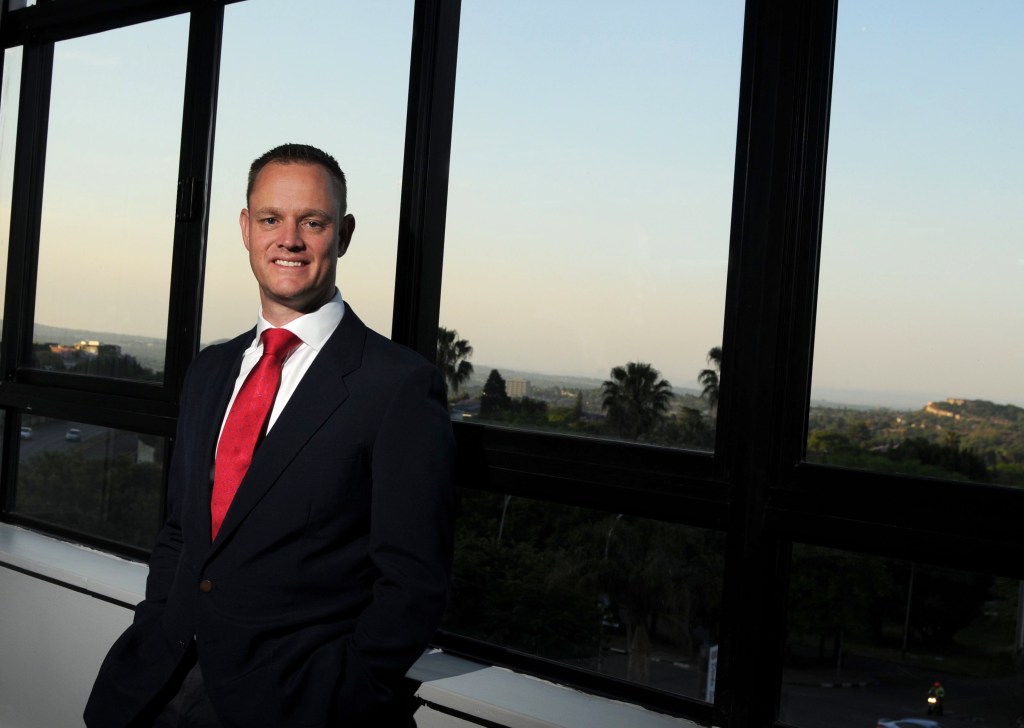
A background in accounting and an aptitude for systems have placed Adrian van der Merwe and his company, North Wind Digital, at forefront of shaping the finance function of the future. As society and industry try to come to grips with the ramifications of the Fourth Industrial Revolution (4IR), van der Merwe, CTO Grant Hesse and their team have combined expert knowledge of the business domain with advanced software robotics to provide a comprehensive solution that has changed the way their customers do business.
RPA to the fore
Key to the mix is the application of Robotic Process Automation (RPA) – the use of smart software to efficiently carry out manual, repeatable and time consuming tasks that are normally performed by people, executing these processes at a much lower cost, 24/7 – and with zero errors. By automating rules-based processes, RPA enables employees to focus tasks which require human cognitive intervention – effectively maximising their skills and time.
“The Finance Factory and the Augmented Worker are the future of financial functions within every business. The Factory Finance function is going to see processes across the financial function of a business ‘productionalised’ and either fully- or majority-automated,” says van der Merwe. “The more specialised functions that aren’t part of the Finance Factory will be covered by automation tools that make accountants’ day jobs easier – making them ‘Augmented Workers’”. Accountants will employ RPA to eliminate the manual, repetitive parts of their job to allow them to be more productive and add value to the function that they’re actually performing. “Either way,” he says, “the reality is that business finance functions are not going to exist without automation. We believe that 83% of finance functions within a business can currently be automated. The 17% that can’t, are the elements that rely on human interaction, like business development, interpretation of analytics and decision-making”.
Career Growth
Van der Merwe’s interest in systems was nurtured when a gap year turned into a long-term job in the UK, which saw him looking after his own system at 23. A subsequent stint in the accounting team at a dotcom company in Copenhagen during the internet boom exposed him to the start-up environment, where the flat structure saw software developers and administrative functions working side-by-side. In 2000, he went into consulting in London, where he found himself constantly being upskilled in the tech space because other finance professionals couldn’t – or wouldn’t – grasp the importance of technology in the space. When he returned from London in 2005, he started 8th Man Consulting, which grew to a team of 27 in the course of eight years, before he sold it to Ernst & Young.
“I had a lot of fun in the subsequent four and a half years as a tech partner at EY, getting exposed to both depth and breadth in terms of a technology skillset,” he says. “That said, the entrepreneurial bug had never really stopped nibbling away, and when the opportunity to start a specialised business, focussing on bringing automation and systems into finance in April 2018, I jumped at the chance”. He’d always had a passion for running his own business, inspired by the challenge of creating something out of an idea. “What I enjoy most about entrepreneurship is that the only boundary to what you can do is cash – if you can dream it, and finance it, you can do it!” he says. “You can touch all aspects of the business, from the image to the marketing and the back-office function – you put the right people in place to run things, but the opportunity to be exposed to every aspect of the business is amazing”.
Entrepreneurial Opportunity
While admitting he’s ‘no Steve Jobs’, the root of the entrepreneurial calling for him is proving that something can be done. “It’s not always about the bottom line – it’s about answering a challenge. Recently, a client challenged us to make something completely out-of-the-box work, and the thrill of finding a way to make it work got us going to the extent that we didn’t even charge them for it when we smashed it out of the park – the idea that we’d solved this insurmountable problem was enough motivation,” he says.
While he thrives in the entrepreneurial space, Adrian says that it isn’t for everyone – particularly if they don’t have the right support structures in place. “Being able to talk to people about the challenges is a huge bonus – I’m fortunate in that my family are serial entrepreneurs and I know quite a few people who have successful businesses, so there’s always someone around to bounce ideas off,” he says. “That said, another serious challenge is the financial side – I don’t feel there’s enough support for entrepreneurs in South Africa. It’s hard to get finance, but the hardest part is even knowing where to look in the first place. There’s a lot of good being done, but the access part is quite opaque, which hinders the entrepreneurial economy”. He believes that entrepreneurship in all its forms should be celebrated. “We’re not just talking about digital tech and innovation – there are people doing amazing things in farming and bakeries employing people and empowering families. We need to support anyone who’s opening up employment opportunities, no matter what the space,” he says. He cites the UK as a great incubator of entrepreneurship, with incentives like massively reduced capital gains tax rates on the sale of SME’s, which contribute to the ease of establishing and selling new ventures.
4IR Opportunities
While nurturing SME’s is set to be one of the keys to growing the South African economy, van der Merwe doesn’t shy away from the fact that 4IR technologies like RPA are also displacing people from jobs which can be taken up by tech. “The solution to that is something which is already a legal requirement in the mining industry, where mining companies have to put money into a fund to be used to rehabilitate the environments in which they operate,” he says. “If we made it a legal requirement for companies implementing automation to put money aside to rehabilitate employees displaced by technology, we have the best of both worlds – more efficient and cost-effective business processes and the opportunity to upskill workers to function in a tech-driven world”.
*A version of this article appeared in the March/April 2020 issue of Destiny Man.
 wineoclock