SA Brands Beyond our Borders
While the franchising system in South Africa continues to perform strongly in the face of a tricky economy with record unemployment levels, there’s also an increasing appetite for local brands to look beyond the country’s borders in the search for additional revenue.
According to the Franchise Association of South Africa’s (FASA) 2018 Franchise Market Report, there are 865 franchise systems in the country, totalling more than 45 000 stores and employing nearly 370 000 people. And 39 per cent of franchisors claimed to have businesses abroad in Africa — the equivalent of 1 775 stores in the franchise population.
Ocean Basket
Ocean Basket opened its first local store in 1995 with their first international store following in Zambia, seven years later. Now, 17 years on, its portfolio numbers more than 200 restaurants across 16 countries. A recent focus on the Middle East, Central Asia and Russia has been driven by cultural factors, according to CEO Grace Harding. “The growing middle class, the rise of a young generation keen to explore new global concepts, and a maturing restaurant sector all play their part,” she says.

OBC Chicken
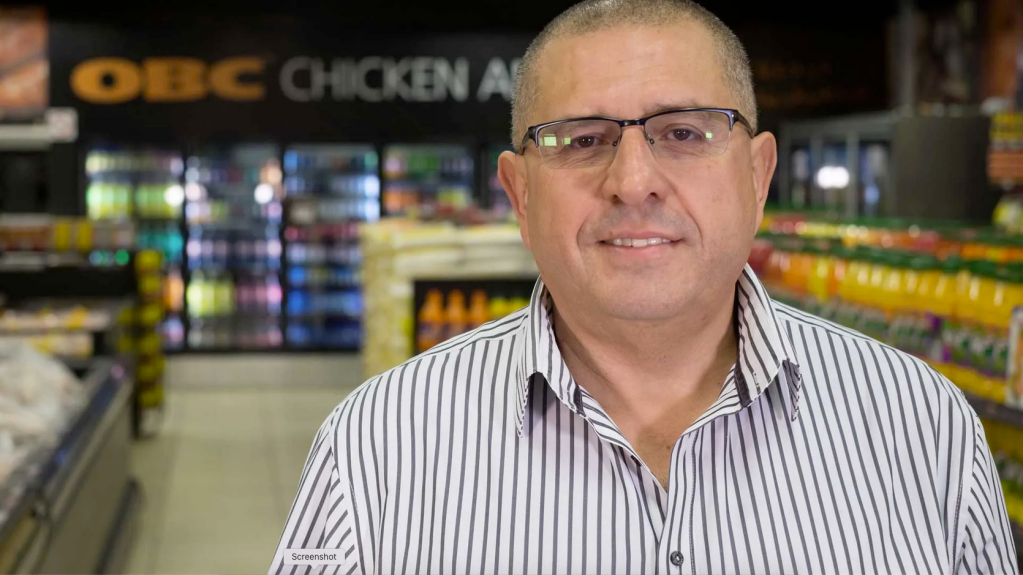
OBC Chicken has focused on South Africa for the last 30 years, establishing a network of 50 stores, and the brand is now eyeing expansion beyond our borders. “OBC has extended into Swaziland and is currently looking at expanding into Lesotho, Botswana, Namibia and possibly Mozambique,” says managing director Tony da Fonseca. “The focus has been on neighbouring countries not only for easier distribution of products, but also to ease into cross-border trade, gaining experience that will help us grow further afield” He says that the decision to expand into adjacent markets was driven by the relevance of the OBC offering to lower- to mid-LSM markets throughout the region.
Adapt or Die
In terms of adapting the brand for markets outside of South Africa, Da Fonseca says that nuance is important, from both cultural and product perspectives. “For example, OBC generally does well with offal products in South Africa, but this won’t necessarily translate to all markets, even in lower-income areas,” he says. “In some instances, local products are protected against competitive imports, so we’ve partnered with local producers to pack products locally for OBC, which has given us the opportunity not only to increase our market share, but also to contribute to localised growth, something that is uppermost in our minds.” He says that very subtle marketing tweaks have helped them adapt, with the fact that they’re used to working in a number of languages in the SA market, making the transition smoother.
Ocean Basket has taken some lessons from the recent failings of big US franchise brands in the South African market, into their own expansion. “Most of the brands went into big shopping malls with exorbitant rentals and development costs. While weekends are busy, the foot traffic does not sustain these high costs,” she says. “Most of the brands already have a strong established local competitor satisfying similar needs, so it’s not easy to gain market share. Having a strong local partner would be a great help, but you need to be aligned when it comes to business culture and profit expectations”.
Innovative Thinking
Da Fonseca says that South African companies have been exceptionally innovative in expanding their businesses through a franchise system, long before it was ‘acceptable’ for overseas brands to consider South Africa as an investment destination. “Those companies weren’t going to sit back and allow easy access, so they did – and continue to – aggressively market to defend their market share. There has been some successes of US brands in SA but those that haven’t quite made it perhaps highlights a lack of research into the opportunity, or perhaps didn’t or couldn’t adapt their model and offering to suit local nuances and tastes,” he says. “Or they were simply too expensive and expectations of returns in light of a declining currency values, meant that the returns simply were not worth it”.
Da Fonseca says that the growth hasn’t been easy, with logistical issues and border-crossing delays forcing some re-thinking. “Today’s rule isn’t necessarily tomorrow’s one at border crossings!” he cautions. “Despite the challenges, sales have doubled on our initial research results — encouraging, but as a franchise business, we remain cautious, as our primary goal is to grow financially successful entrepreneurs.”
Building loyalty has been a challenge for Ocean Basket in its new territories, with limited resources a major factor. “Word of mouth is still king – it happens through great food, outstanding service and ambience. Digital media has also created new opportunities to talk to a selected target market, but ultimately we focus on finding great locations for our restaurants”.
SA Franchises Beyond our Borders
FASA’s 2018 Franchise Market Report lists the presence of SA franchises beyond the country’s borders as:
- Africa
- Namibia 59
- Botswana 49
- Mozambique 27
- Zimbabwe 24
- Swaziland 23
- Kenya 22
- Zambia 20
- Nigeria 9
- Angola 5
- Ghana 4
- Rest of the world
- UK 10
- Mauritius 8
- Australia and UAE/Bahrain/Saudi Arabia 7
- USA 6
- Dubai, Canada and Far East 5
- Brazil 4
- Europe & Madagascar 3
*A version of this article appeared in the 2019 Sunday Times Franchising supplement.
Categories: Profiles
 wineoclock