As safe as a Plane in a Pandemic…
Remember the feeling of finally settling down in your window seat – the anticipation of the adventure that awaits at the other end of an intercontinental flight? The COVID-19 pandemic and its associated international border closures has robbed us of one of life’s great pleasures – travel for travel’s sake – but airlines are doing everything they can to help hasten its return.
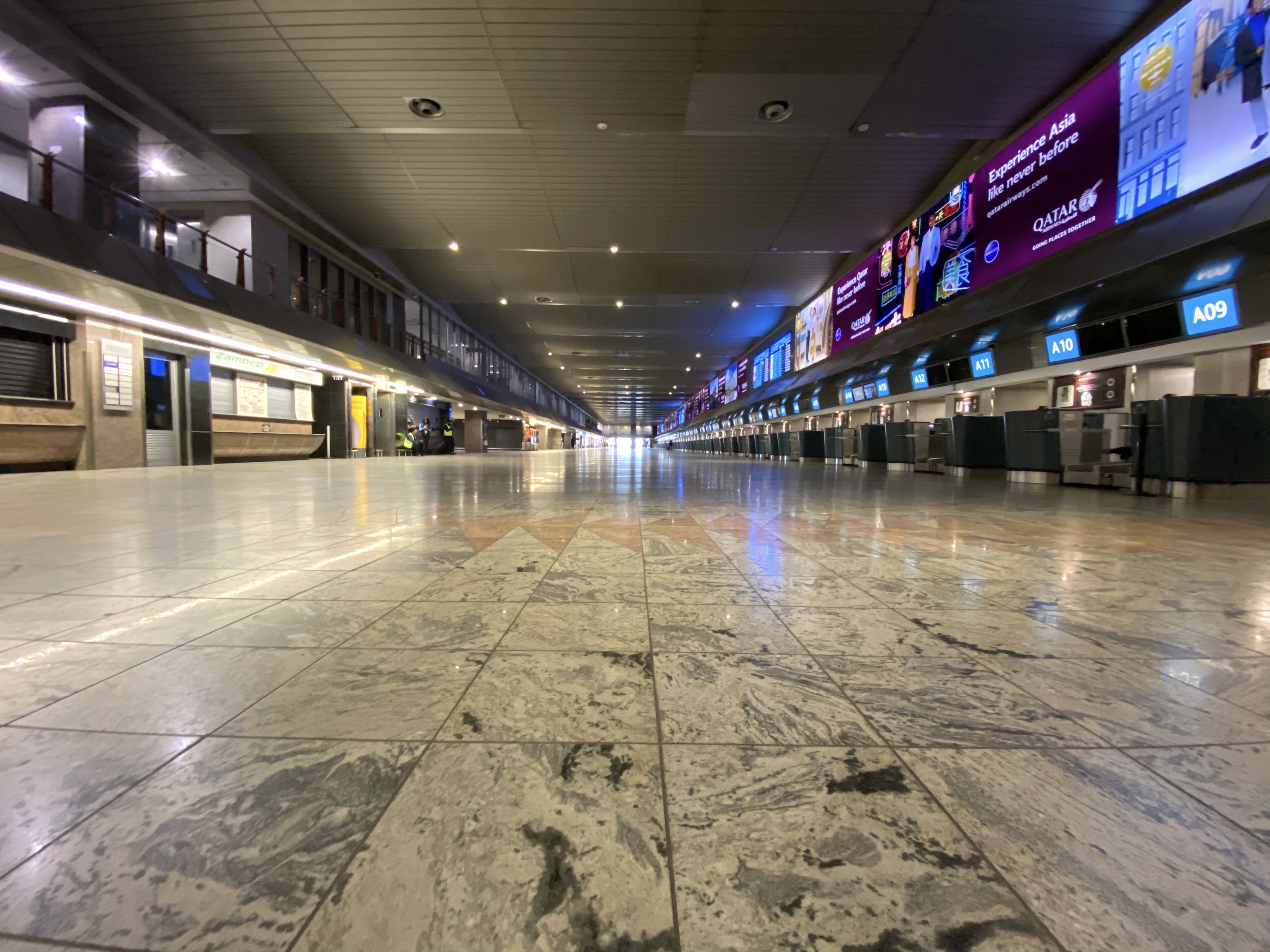
The late-departing KLM flight on 26 March 2020 was the final scheduled commercial passenger flight to depart OR Tambo International Airport before the continent’s busiest airport was shuttered to scheduled flights for 186 days, until select airlines from specified countries were allowed to touch down again from 1 October. Cargo and logistics flights continued under lockdown, and Air France-KLM continued to arrange over 100 repatriation flights between South Africa and Europe at the height of the pandemic – a massive logistical exercise involving thousands of moving parts, additional to those already required in getting 300 people from one side of the planet, to the next.
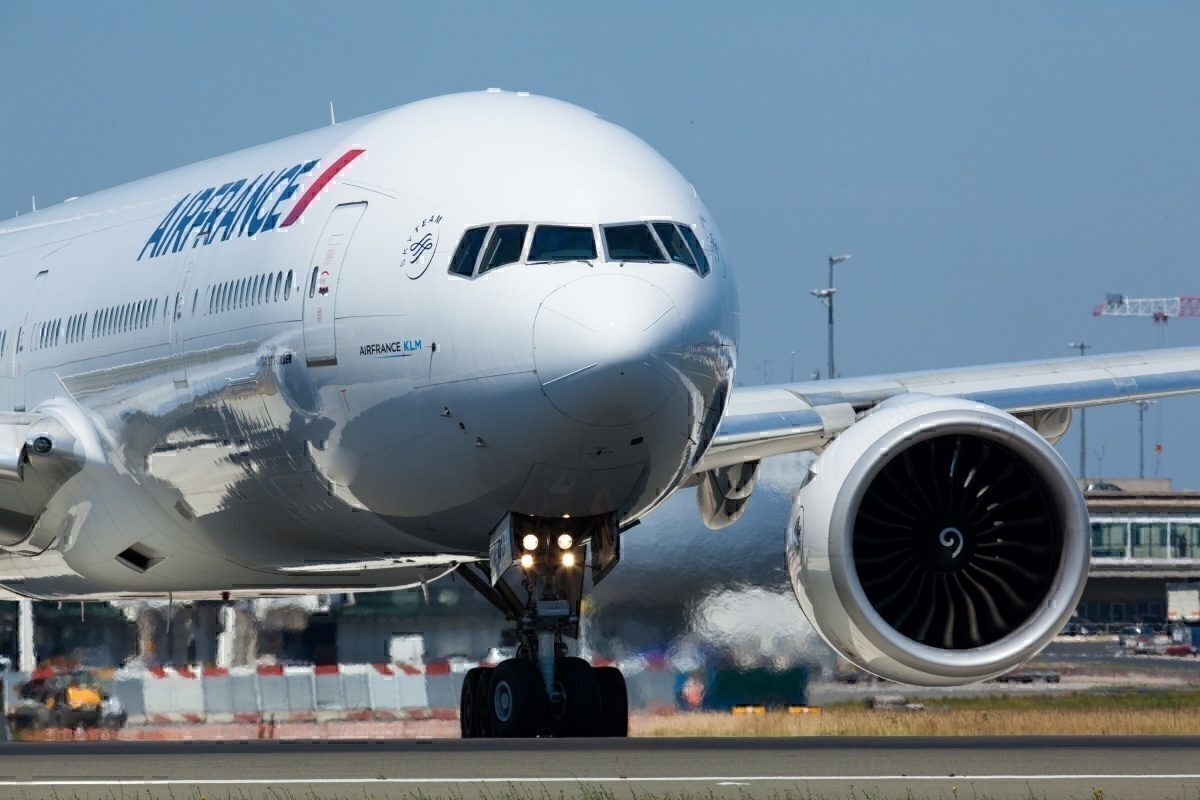
Safety has always been the aviation industry’s number one priority
This massive repatriation exercise was done safely, because of the carrier’s strict adherence to levels of sanitising and physical distancing measures that exceed those prescribed by IATA and the WHO – and those levels are being maintained, now that Air France-KLM is operating regular scheduled flights between South Africa, the Netherlands and France, once more. The governmental goalposts continue to shift over who can fly, why they fly and what medical testing they require to be allowed to fly – but it’s heartening to see that if, indeed, you’re allowed to fly, your safety is held in the highest regard by the airlines.
‘“All airlines are governed by incredibly strict aviation health and safety standards. This was the case before COVID-19, and has been strengthened and reinforced during the pandemic to ensure passenger and staff safety as priority number one. On top of that, we are taking further measures to ensure absolute safety of all of our passengers and crew,” says Wouter Vermeulen, General Manager Southern Africa at Air France-KLM.
Safety at the Airport
ACSA, stakeholders in the aviation value chain and the various airlines have worked together to establish an array of protocols which help ensure passenger and staff health, starting from pre-flight, through to boarding. The landside protocols are largely standard – but the airlines have some say in the way boarding is handled, and then ultimate say in the rollout of on-board protocols, subject to alignment with IATA and WHO regulations.
Pre-flight protocols are largely common sense-based:
- Masks are mandatory for anyone entering the airport.
- Limited entry points and limited access points throughout the airport
- Thermal scanners at these various entry points taking the body temperature of travellers before being allowed entry into the airport terminal. Should a traveller have a high temperature, they will be taken to the on-site medical clinic immediately for further checks, including a PCR test.
- There are numerous sanitising stations throughout the airport for use by anyone in the airport terminal
- There are social distancing stickers placed on the floor throughout the terminal to ensure travellers remain at a safe distance while queueing and while at the various checkpoints. There are also social distancing stickers on certain seats throughout the airport to avoid passengers sitting too close together
- At the check-in counters, in addition to the face masks worn by airport staff, AFKLM staff are also wearing face shields. The check-in counters have also been fitted with Perspex shields to ensure no physical contact between airline staff and passengers
- Passengers are all expected to fill in and submit the mandatory health declaration form at the security checkpoint, before being processed for regular security scanning. It is at this step in the process that they will also go through a body scanner and x-ray machine which doesn’t require the removal of electronic equipment from hand baggage – a welcome new element at International Departures.
- If a passenger receives a physical boarding pass, it will not be touched by any other member of staff or crew throughout, and the passenger will scan their own boarding pass at the boarding gate. The use of digital check-in and boarding passes are encouraged.
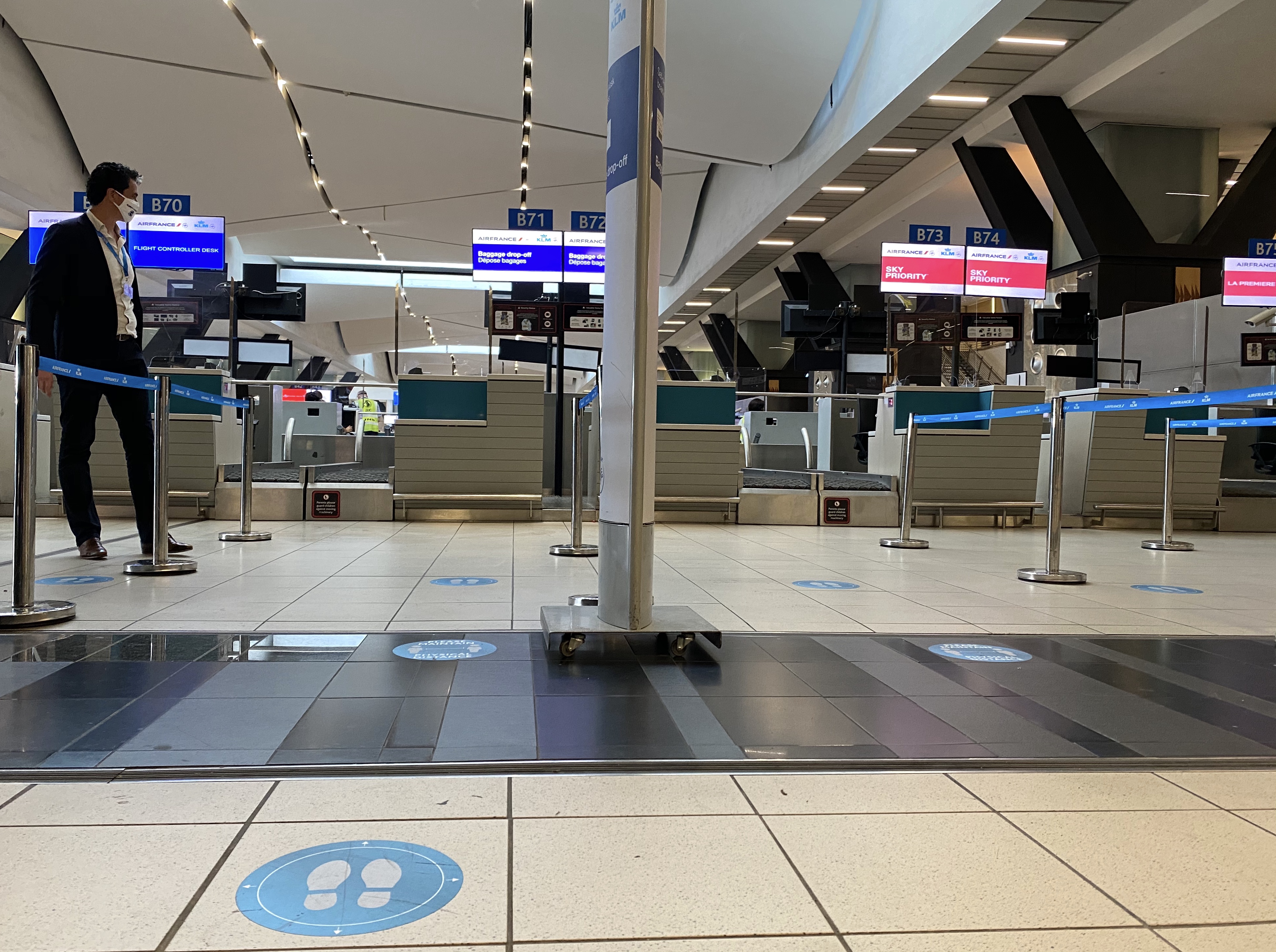
Get on board
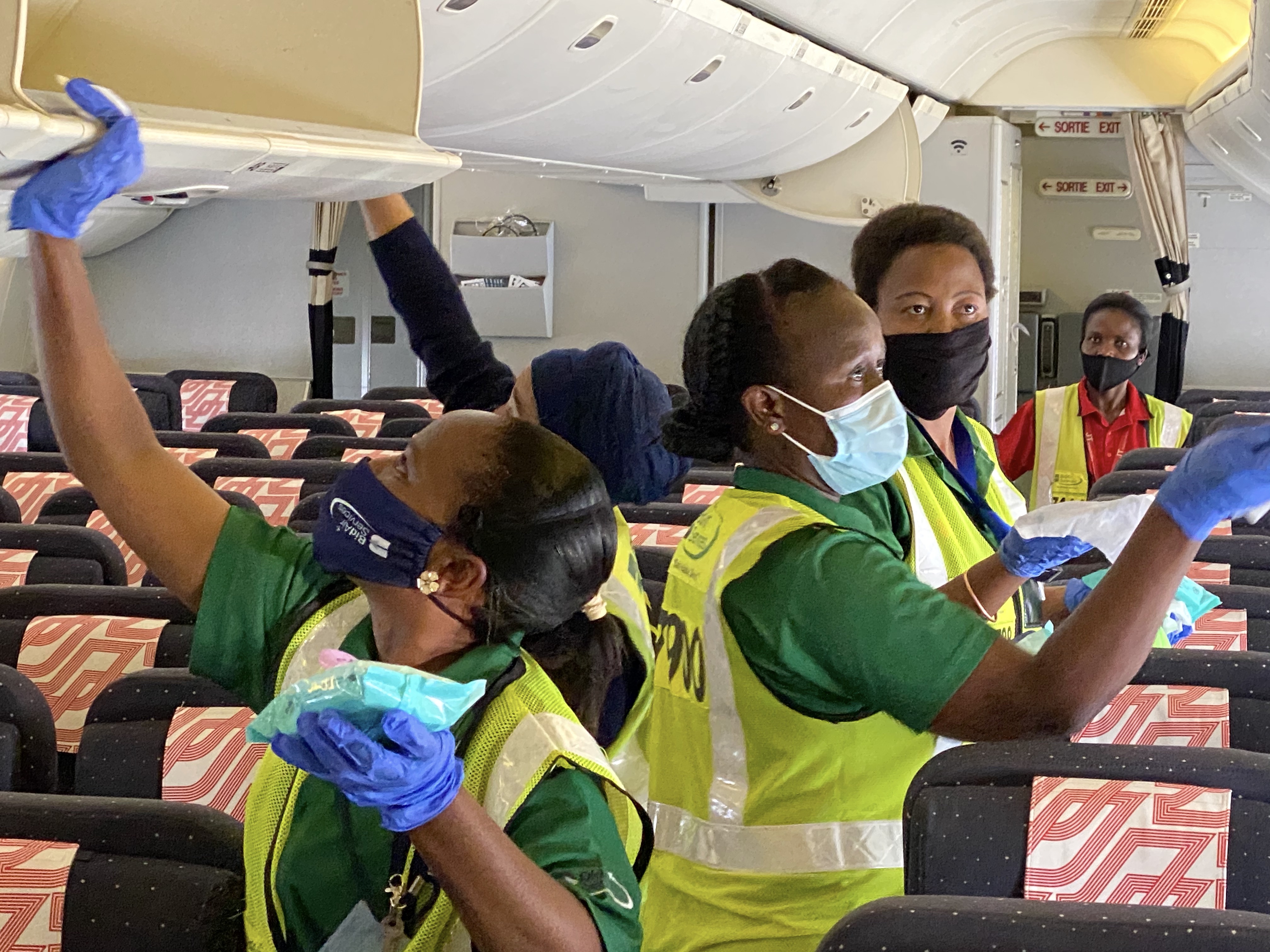
On the airside, AFKLM flights are disinfected and sanitised on arrival in South Africa, with access strictly controlled once the process has been completed. Each aircraft is disinfected with the highest grade disinfectant that has been approved by the South African Civil Aviation Authority, the European Union Aviation Safety Agency (ESEA) and Boeing. Every surface area of each plane is sanitised: from the ceiling to the floor; the toilets and lavatory sink; in the galleys (where meals are prepared); bag racks and overhead lockers; seat belts; headrests; screens, headsets and remotes; and more.
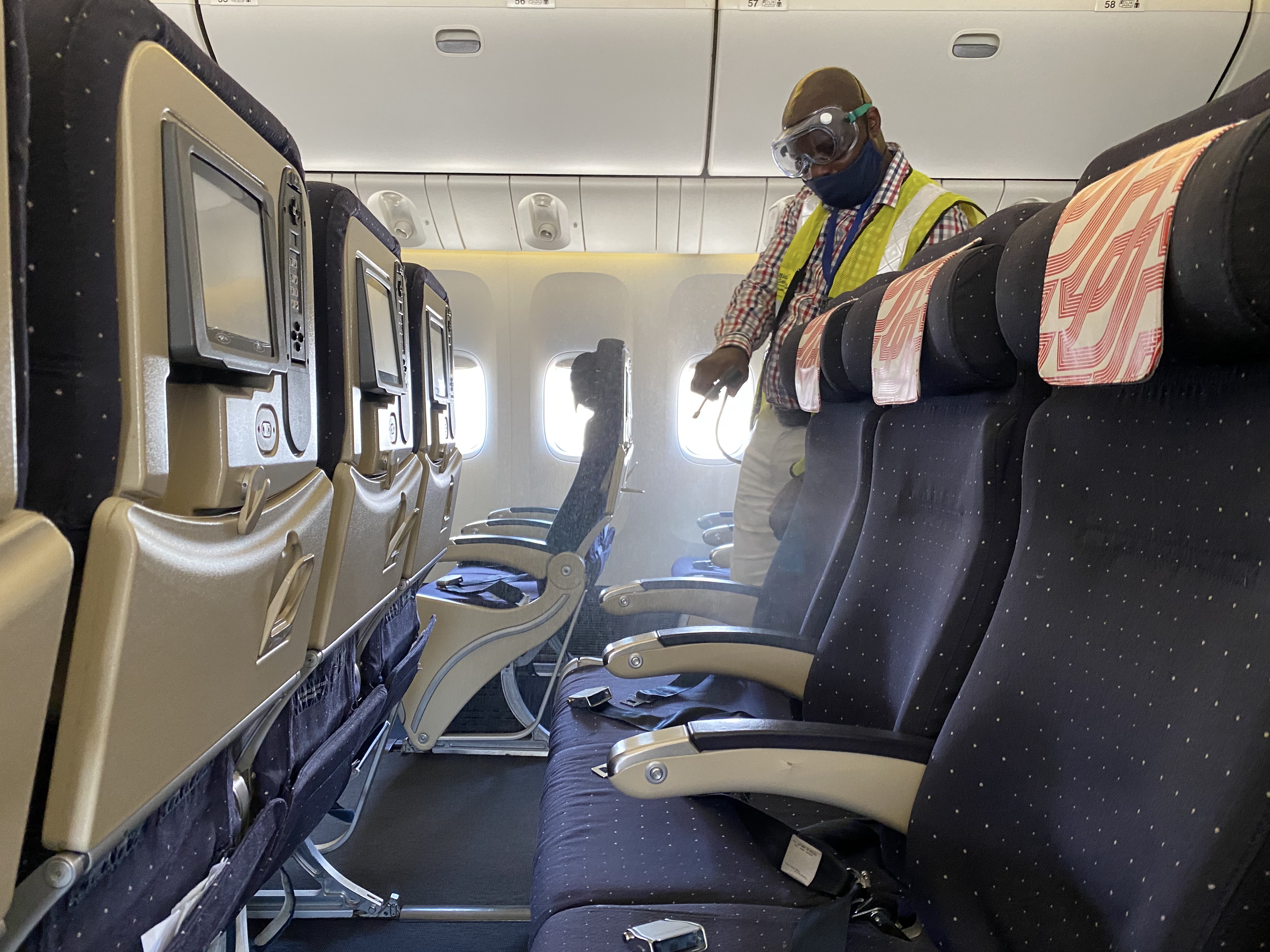
Sanitised blankets and pillows are individually packed in plastic and will be made available to passengers on request. Once an aircraft has been completely sanitised, it receives two certificates confirming the highest level of sanitisation has been completed – one of which goes into the paperwork in the cockpit, and the other, to the relevant local authorities. Stickers confirming the completion of the sanitisation process are affixed to the doors of the aircraft – essentially a seal of approval which all passengers entering the aircraft can see for themselves.
At the boarding gate, AFKLM passengers are split into 10 zones, based on seating areas. While people at the sharp end and qualifying Flying Blue members are seated first, those who turn right at the aircraft door are seated from the rear of the plane, forwards. This method is employed in an attempt to ensure that passengers don’t pass each other on the way to their seats, minimising physical contact.
In-Flight Experience
Masks are mandatory throughout the flight for passengers and crew – Air France requires surgical grades of mask to be worn, while on KLM flights, safe face-coverings are allowed. There’s a small stock of masks on board for passengers whose coverings aren’t appropriate or break during the flight.
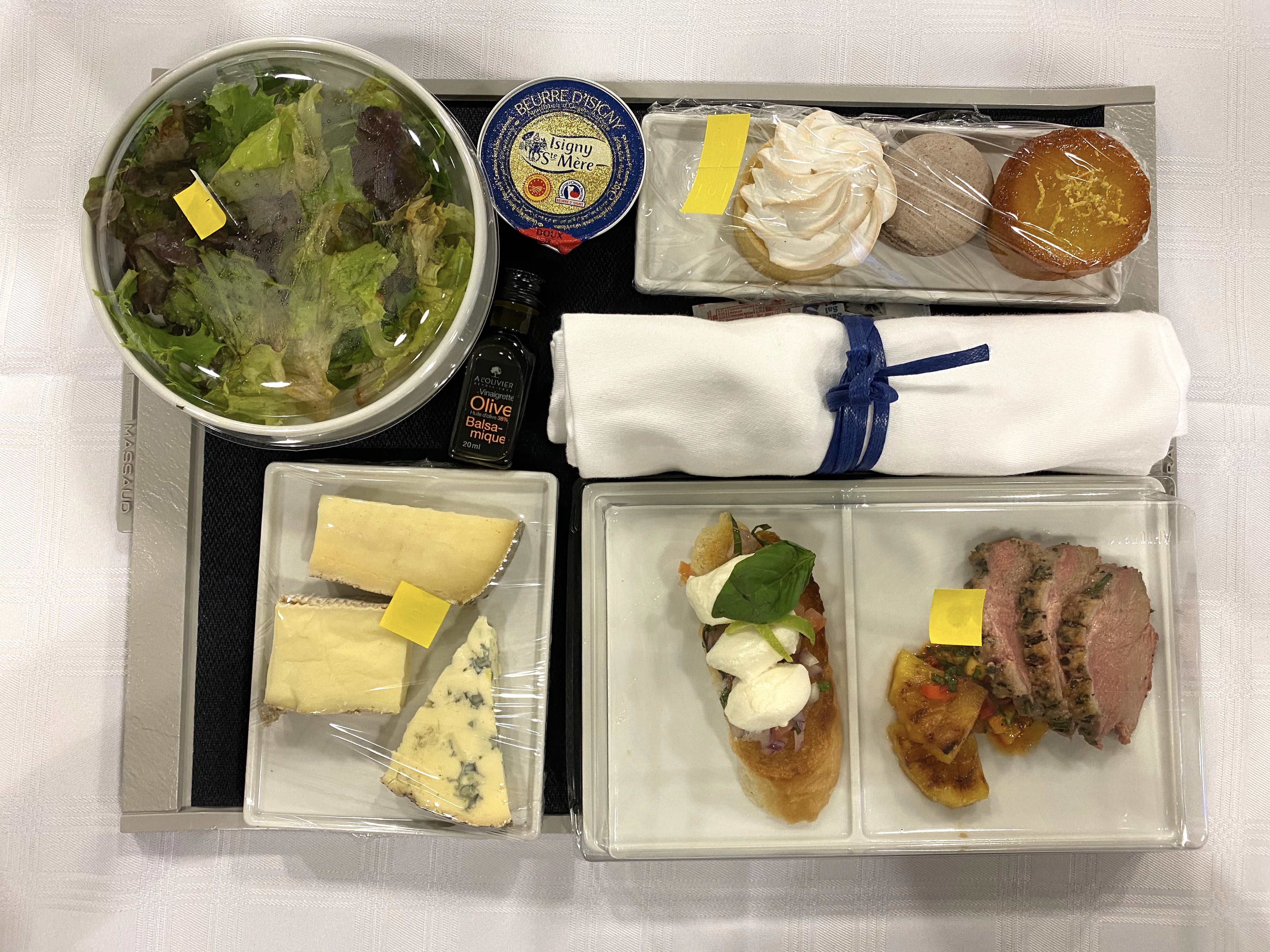
During the flight, while physical interaction and contact between passengers and crew is limited, in-flight services continue. All meals (which are prepared in the Newrest kitchen with incredibly strict health and safety protocols in place) are now pre-packed on a tray and handed to every passenger throughout the various cabins on each flight. Each of these meal trays are individually sealed, so that none of the contents are handled by anyone between departing the safe kitchen space and being opened by the passenger. Passengers are still served drinks during the flight and can also still enjoy the in-flight entertainment. In-flight magazines are app-based for reading on tablets and mobile phones.
There’s much debate about how effective all the land-based physical distancing precautions are, once passengers are seated close together for upwards of 11 hours on a flight to Europe. AFKLM staff work hard to ensure that as much seating room as possible is allocated between passengers, space-dependent – and with in-flight wandering around strictly kept to a minimum, its easier to maintain physical distance.
A huge benefit is that the air in the cabin is renewed every 3 minutes, and filtered with HEPA (High Efficiency Particulate Air) filters – the same as those used in hospital operating theatres. HEPA filters can filter out 99.9% of small particles – including those the size of coronavirus. Air in the cabin also travels from ceiling to floor, rather than being circulated around the cabin – which helps minimise the risk.
Air flows in via vents in the ceiling and the panel above passengers’ seats and is sucked out via vents in the floor, passed through the HEPA filters, mixed with fresh air from the outside and circulated back into the cabin, using the same process. This vertical movement of air forms a protective barrier between rows, making it highly unlikely that the virus could pass between passengers.
The midst of a pandemic is a scary time to be anywhere outside your home – but if you need to travel for any essential purpose, it’s helpful to know that AFKLM is as concerned about the wellbeing of their staff and passengers as the people themselves are, and are doing everything they can to ensure that everyone on board is protected and feels as safe as possible.
Categories: Travel
 wineoclock