Meet Thami Prusent
Thami Prusent has a strange sense of fun. The rugby-playing economics graduate entered Big Brother Africa in 2008 and managed a whirlwind romance in front of the cameras – and the whole continent. He emerged after 77 days and started seeking a new adventure. After 3 years of plotting, he decided to travel from Cape Town to Cairo – without a cent in his pocket. His book, CapeToCairoForFree, chronicles his ‘misadventures’.
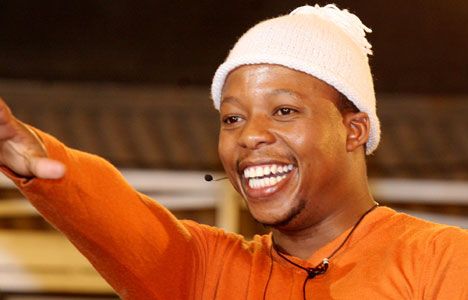
Both his big moves have been governed by international events. He entered Big Brother Africa largely in response to the xenophobic attacks that rocked South Africa during 2008. “The continent’s biggest television show seemed like the appropriate stage to emphatically rebuke the lunacy displayed by some of my countrymen,” he says. In the process of founding an eco-conscious clothing label, Sili Rabbit, Prusent heard about the crisis in Somalia where 29 000 children under the age of 5 died of starvation in the 3 months leading up to August. The Cape2Cairo4Free concept was born – he would traverse the continent without a cent on him, to raise awareness and funds to support feeding schemes in Somalia, and other worthy continental causes. “I believe that trying to make a difference doesn’t always have to be a dreary affair and some positive extremism is needed to better engage indifferent youth”.
The Value of Profile
The profile afforded him by his presence on the continent’s most-watched reality TV show came in handy when trying to secure interviews and complementary visas, but carried very little weight when he was stranded amongst ordinary people in places like Bujumbura and rural Ethiopia. “More consequential than the profile is the continental network of lifelong friends I made on the show,” he says. “Without them I’d still be wondering around the Karoo, trying to get to Cairo”.
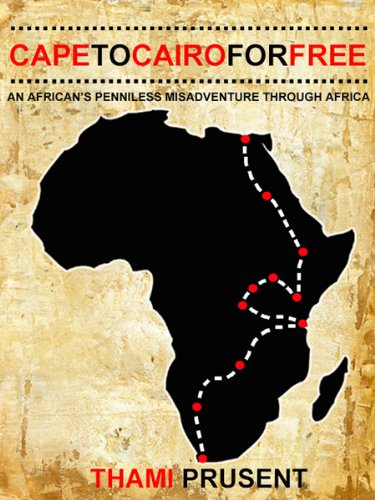
A free bus trip to Cape Town kicked off the journey, with stops in Namibia, Zambia, Tanzania, Burundi, Rwanda, Kenya, Ethiopia, Sudan before he reached Egypt – after a challenging and eye-opening 4 months. “I stayed in Ethiopia the longest as my Sudanese visa relied on me getting an Egyptian visa, which relied on the successful hosting of their first democratic elections. There were rumours amongst my friends that I was so enthralled by the beauty of Ethiopian women that I was making up excuses not to leave!”
“The trip from Nairobi to Addis Ababa was undoubtedly the most difficult. I ran out of money in Isiolo with 1111km to go. So I hitched a ride on a Kenya Army truck, slept outside a shop, rode on top of a truck-cum-taxi, spent another night under the stars, survived extortion by an immigration official, pawned my external hard-drive and spent a night in a brothel,” he says. And you thought flying Economy Class was tough… “My scariest experience, however, was at Dadaab – the world’s largest refugee camp. Some foreigners were recently kidnapped and I spent the entire night in my tin-shack hotel room waiting for armed men to storm in”.
Finding Hope
It wasn’t all extortion and rough sleeping, though. His passion for the situation in Somalia was mirrored by scores of people he met on his journey. “Namibia had a ‘Hope for Somalia’ SMS campaign, there was a convoy of trucks filled with maize from Zambia, the Rwanda Youth Campaign for Somalia organised concerts and the Kenyan SMS campaign became the most successful of its kind in the world,” he says.
He met amazing – and scary – people along the way, strangers who showed him kindness and shared their meagre means to support him. Having made it to his destination, he was forced to consider whether he’d achieved his aim. “Not by a long shot,” his is response. “I’m afraid that quests like mine are the equivalent of putting lipstick on a bulldog. We African youth need to come together in a concerted effort that focuses on both climatic and conflict early-warning systems. A proactive singular youth NGO that is present all AU states is perhaps a step in the right direction”.
Referring to the ‘misadventure’ in his book’s title, Prusent says that an adventure signifies some level of heroism. “My trip was anything but. It was more like fumbling about the continent and continually being rescued by friends, family and total strangers”. Did he make a difference? “A small one, but a difference, nonetheless”.
Travel Bug
No stranger to continental travel – his first trip was undertaken when he was 12, and by his mid-teens he’d seen a significant portion of the SADC region. “This was my chance to indisputably prove what I have known for most of my life – that Africans are the most generous beings you will ever come across. Our hearts are as warm as the sun that shines on our backs”.
Having seen more of the continent, he’s keen to clear up misconceptions about Africa that the rest of the world clings to, blindly. “Foreigners’ funniest misconception is that Africa is one country – but I think they are actually on to something there. There is no conceivable reason why Africa is not united as a federated state. Our shared history and cultures – including the similarities of the Bantu languages – make a compelling case for shared sovereignty. On the other hand, in Neru, we had a herd of elephants leisurely walk across the national road – supporting the other widely-held misconception that wild animals roam the streets!”
Lessons Learned
Over the course of tens of thousands of kilometers and 120 days, he must have learned a few home truths? “Definitely – there is so much we can learn from the continent. For example, there is the comparison between Rwanda’s Gacaca Courts and our own Truth and Reconciliation Commission. Rwanda’s courts were localised and processed over a million genocide cases, with a focus on restorative – as opposed to punitive – justice. There is a feeling amongst some that our TRC was fast-tracked and political expediency supplanted the painful process of picking at the scabs of truth, which is essential to true reconciliation,” he says.
On a personal level, Thami went into the trip thinking he could save Africa, but came back having been saved by Africa. “Africa is on the dawn of greatness and we are privileged to be alive during this era,” he says. The potential of South African youth is limitless. “We have no choice but to harness it or we might end up with an African Spring on our hands”. On the other hand, he says he did learn how emotionally disconnected South Africa is from the rest of the continent.
Since returning from the trip and penning the book, he has launched an NGO called Mobile Giver that advocates for zero-rated SMS donations in the country. “Many people are put off by the most efficient means of donating, because fees charged by mobile operators and service providers are excessive. Relaxation of these fees would play a fundamental role in turning disaffected people into proactive givers. Linked to Sili Rabbit, it gives the label deeper roots than random events that occur sporadically”.
Thami says his trip didn’t make him a hero – but he does get to hang around some, from time to time. “I met incredible people all over the continent, in the most obscure places. The key trait of any hero is consistency. Although we deliver ‘Rescued Food’ once a week to Malerato’s Centre for Hope in Mamelodi through Mobile Giver, we cannot be put in the same league as the courageous ladies who look after those orphans every single day”.
Would he do it all again? “Giving away monetary power and laying myself at the feet of strangers was the most humbling experience of my life and I would need a very good reason to go through that emotional rollercoaster again,” he says. On the other hand, nobody ‘does’ West Africa – I wouldn’t mind doing a ‘cheapskate safari’ through there”…
*This article was originally published in khuluma.
Categories: Profiles
 wineoclock
Great Post
LikeLike